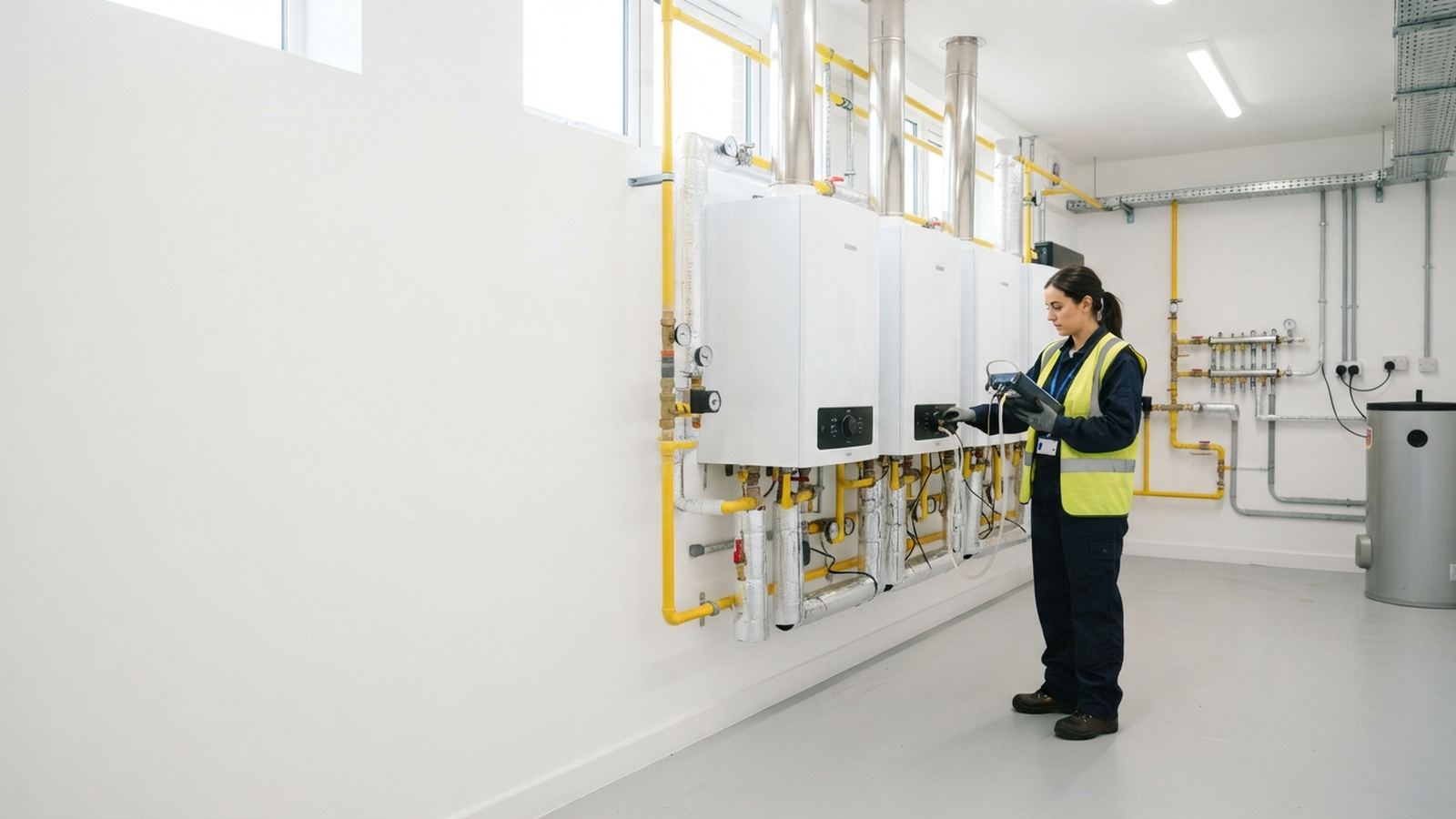
Get a Commercial Gas Safety Certificate Quote from Gas Safe Engineers
Tell us about the gas appliances on site and we'll match you with Gas Safe registered commercial engineers. Compare no-obligation quotes in about a minute, and get the inspection and safety record your insurer, landlord and the law expect.
Do commercial premises need a gas safety certificate?
If there are gas appliances at a place of work you control, you have a legal duty to keep them, the pipework and the flues maintained in a safe condition. An annual inspection by a Gas Safe registered engineer qualified for commercial work, recorded on a non-domestic gas safety record (commonly a CP17, or a CP42 for catering equipment), is the recognised way to meet and evidence that duty.
- Regulation 35 of the Gas Safety (Installation and Use) Regulations 1998 requires every employer to ensure gas appliances, installation pipework and flues at a place of work under their control are maintained in a safe condition.
- Unlike rented homes, the regulations set no fixed interval for commercial premises. Annual inspection is the accepted norm, in line with manufacturers' instructions and HSE’s Approved Code of Practice L56, and it is what insurers ask to see.
- Gas work may only be carried out by engineers on the Gas Safe Register, and commercial appliances need an engineer whose registration covers non-domestic work, which is listed on their ID card.
- Commercial kitchens need their own inspection of catering equipment, ventilation and interlocks, recorded on a CP42, as HSE’s gas safety guidance makes clear for catering premises.
Maintained by the ComSurv team and checked against UK government, HSE and professional-body sources. ComSurv is a matching service, not a firm of surveyors or contractors. General information, not legal advice.
What is a commercial gas safety certificate?
A record, issued by a Gas Safe registered commercial engineer after inspecting and testing the gas installation, confirming whether the appliances, pipework and flues are safe to use. For non-domestic premises it is usually a CP17, with a CP42 for commercial catering equipment.
A duty on every employer
Gas appliances, pipework and flues at work must be kept in a safe condition.
CP17 for commercial plant
The non-domestic gas safety record for boilers, heaters and pipework.
CP42 for commercial kitchens
Covers catering appliances, extraction, ventilation and gas interlocks.
Commercial qualifications required
A domestic-only engineer cannot certify commercial appliances.
Matched with the right engineers in three steps.
Tell us what you need
Answer a few quick questions about the property, what you need and your timeline.
We match you with engineers
We shortlist Gas Safe registered commercial engineers who cover your area and property type.
Receive quotes and book
Compare no-obligation quotes and book the provider that's right for you.
What a commercial gas safety inspection involves
The engineer inspects each gas appliance, the installation pipework and the flues, checks operating pressures, ventilation, flue performance and safety devices, and carries out a tightness test where appropriate. Anything unsafe is classified and made safe. You receive a gas safety record listing every appliance checked, the results and any defects or remedial work required.
What it delivers
- Inspection of appliances, pipework and flues
- Tightness, pressure, ventilation and flue checks
- A CP17 record, and a CP42 where there is catering equipment
- Unsafe situations classified and made safe
- A list of any defects and remedial work
Who needs it
- Employers and business owners with gas on site
- Commercial landlords and managing agents
- Restaurants, hotels and commercial kitchens
- Facilities managers and multi-site operators
Why it matters
- Maintaining gas appliances safely is a legal duty
- Carbon monoxide and gas leaks can kill
- Insurers expect a current record
- Catering premises are routinely checked by enforcement officers
A domestic engineer cannot sign off your commercial boiler.
Gas Safe registration is specific to the type of work. Commercial heating plant and catering equipment need an engineer whose card lists those non-domestic categories, and a record issued by anyone else is not worth the paper it is printed on. We match you with engineers registered for the appliances you actually have.
Get gas safety quotes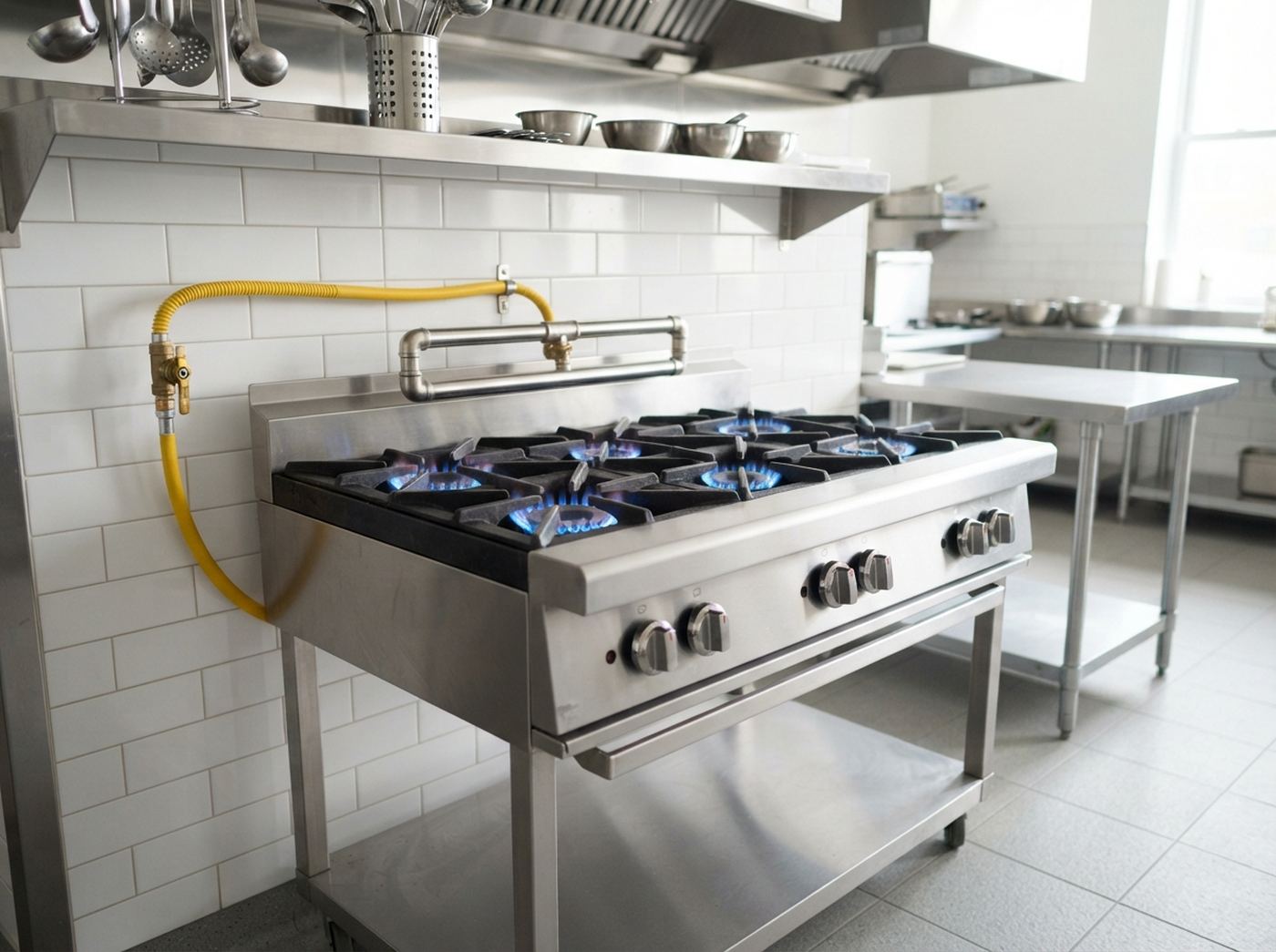
Qualified, accountable and vetted.
The engineers we match you with are on the Gas Safe Register with the non-domestic qualifications their work requires. ComSurv is a matching service and is not itself a regulated firm.




Commercial Gas Safety Certificate FAQs
How much does a commercial gas safety certificate cost?+
Is a commercial gas safety certificate a legal requirement?+
How often is a commercial gas safety inspection needed?+
What is the difference between a CP12, CP17 and CP42?+
Can any Gas Safe engineer inspect commercial appliances?+
Who is responsible in a let commercial building?+
One property, several obligations. Sort them together.
Most commercial premises carry more than one compliance duty. These are the ones that usually sit alongside this service, or run our compliance check to see everything your property needs in one go.

Get your gas safety inspection booked.
Free, no-obligation, and matched to Gas Safe registered commercial engineers who cover your area. Takes about a minute.
Get my quotes →