How Often Should Commercial Air Conditioning Be Serviced?
- Most commercial air conditioning should be serviced at least twice a year, typically before the cooling and heating seasons; heavy-use and critical systems need quarterly attention.
- A service visit covers filters, coils, condensate drains, refrigerant and leak checks, electrical connections, controls and performance.
- The servicing contract should include your mandatory F-Gas leak checks and records.
- Planned servicing cuts energy use, extends equipment life and avoids premium-rate emergency call-outs.
Air conditioning fails in July, which is also when every engineer in the country is busy. A planned servicing schedule is how you avoid being the business sweating through a heatwave while waiting for a call-out. It is also where your F-Gas leak checks and most of your TM44 recommendations get done. Here is a sensible frequency and what each visit should cover.
How often
For typical office and retail comfort cooling, twice a year is the common recommendation: once before the cooling season and once before the heating season for heat-pump systems. Server rooms, hospitality, healthcare and any system running near capacity benefit from quarterly visits. Manufacturers’ warranties often require a minimum service frequency, so check the terms before settling on a schedule.
What a service visit includes
- Cleaning or replacing filters and checking airflow.
- Cleaning indoor and outdoor coils.
- Clearing condensate drains and checking for leaks.
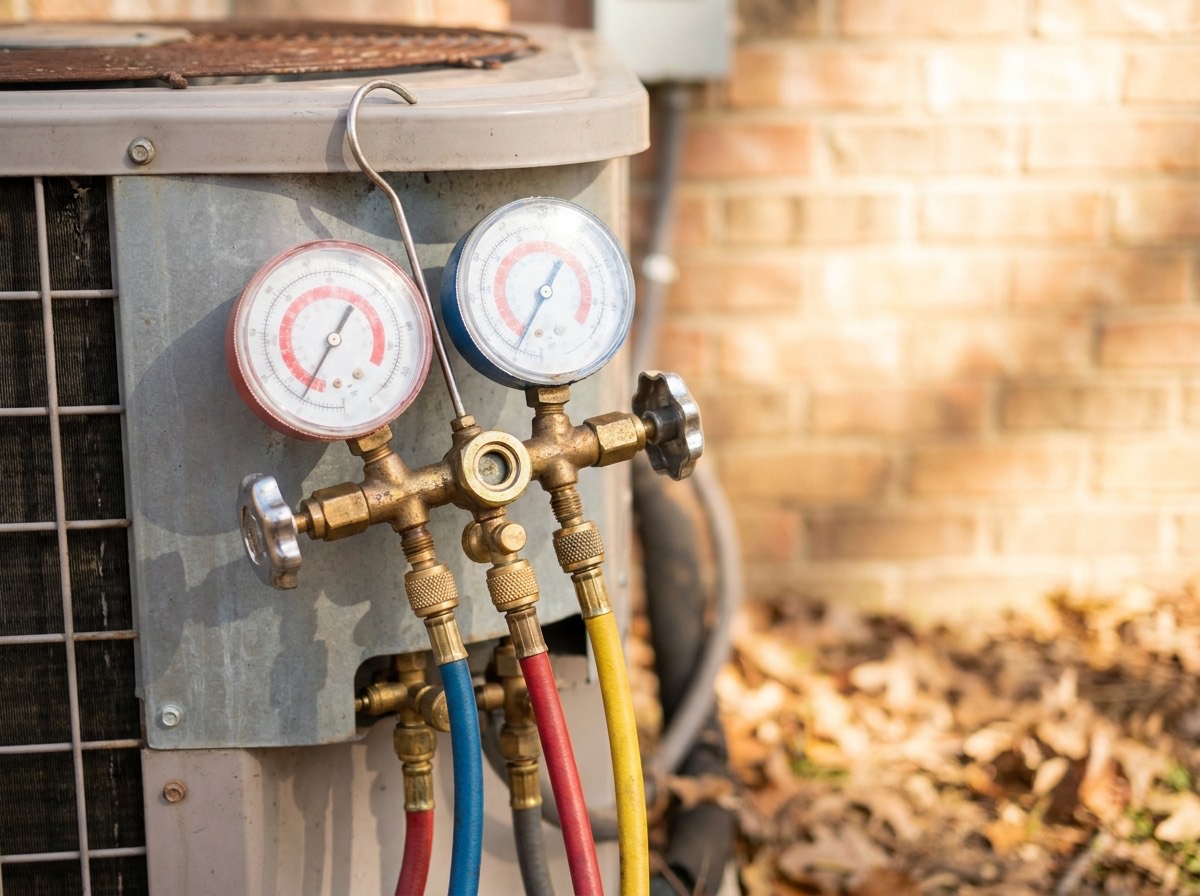
- Checking refrigerant pressures and carrying out F-Gas leak checks where required.
- Inspecting electrical connections, contactors and fans.
- Checking controls, setpoints and timers.
- Recording performance and any faults.
The legal checks inside the contract
Systems above the F-Gas thresholds must be leak-checked at set intervals by certified engineers, with records kept. A servicing contract with a certified provider should carry those checks and produce the records as a matter of course. Our guide to F-Gas sets out the intervals. The separate five-yearly TM44 inspection can often be bundled with a servicing visit.
Set up a servicing contract
Match with F-Gas certified air-conditioning engineers for planned servicing. No-obligation quotes.
Why planned beats reactive
Dirty filters and coils make systems work harder, which costs energy and shortens compressor life. Small refrigerant leaks become expensive failures. A missed condensate drain becomes a ceiling collapse. Planned visits catch all of this at a fraction of the cost of the emergency, and a contract gets you priority when the heatwave hits. Our guide to maintenance contracts covers folding air conditioning into a wider plan.
What to look for in a contract
- Certified engineers and company F-Gas certification.
- Visit frequency matched to your use and warranty.
- Leak checks and records included.
- Response times for faults, and what call-outs cost.
- Clear pricing for parts and refrigerant.
Setting it up
ComSurv matches you with F-Gas certified air-conditioning engineers who cover your area and offer planned servicing contracts. Compare no-obligation quotes and get the schedule in place before the next summer.
Sources & further reading
- Regulation (EU) No 517/2014 on fluorinated greenhouse gases (retained UK law) — leak-check and competence requirements
- RICS planned preventative maintenance standard — planned maintenance principles
External links open in a new tab. ComSurv is a matching service, not a firm of surveyors, and is not affiliated with these organisations. This article is general information, not legal, surveying or valuation advice; take advice on your specific situation.