How Often Should PAT Testing Be Done? Risk-Based Intervals Explained
- No regulation sets a PAT testing interval. HSE guidance and the IET Code of Practice describe how to choose one based on risk.
- Three things drive the interval: the class of equipment, the environment it is used in, and how often it is moved or handled.
- Office IT equipment can go years between formal tests; construction tools and kitchen equipment need checking every few months.
- A good contractor records a recommended next-test date per item, so the schedule runs itself after the first visit.
The question most businesses ask is "how often do we have to PAT test?" and the honest answer is that nobody has set a number for you. The law requires equipment to be maintained; HSE guidance and the IET's code of practice describe how to decide the interval. The deciding factors are what the equipment is, where it is used and how roughly it gets treated. A laptop charger in a quiet office and a drill on a building site are not the same problem.
Why there is no fixed interval
The HSE position is that the law requires maintenance to prevent danger and does not specify how or how often. Fixing a single interval for everything would mean over-testing low-risk items and under-testing high-risk ones. So the guidance describes a risk-based approach instead, and leaves the judgement with the duty holder and the competent person they use.
The practical consequence is that "we test annually" is a choice, not a rule. It may be the right choice for a workshop. It is more than an office needs.
The three factors that set the interval
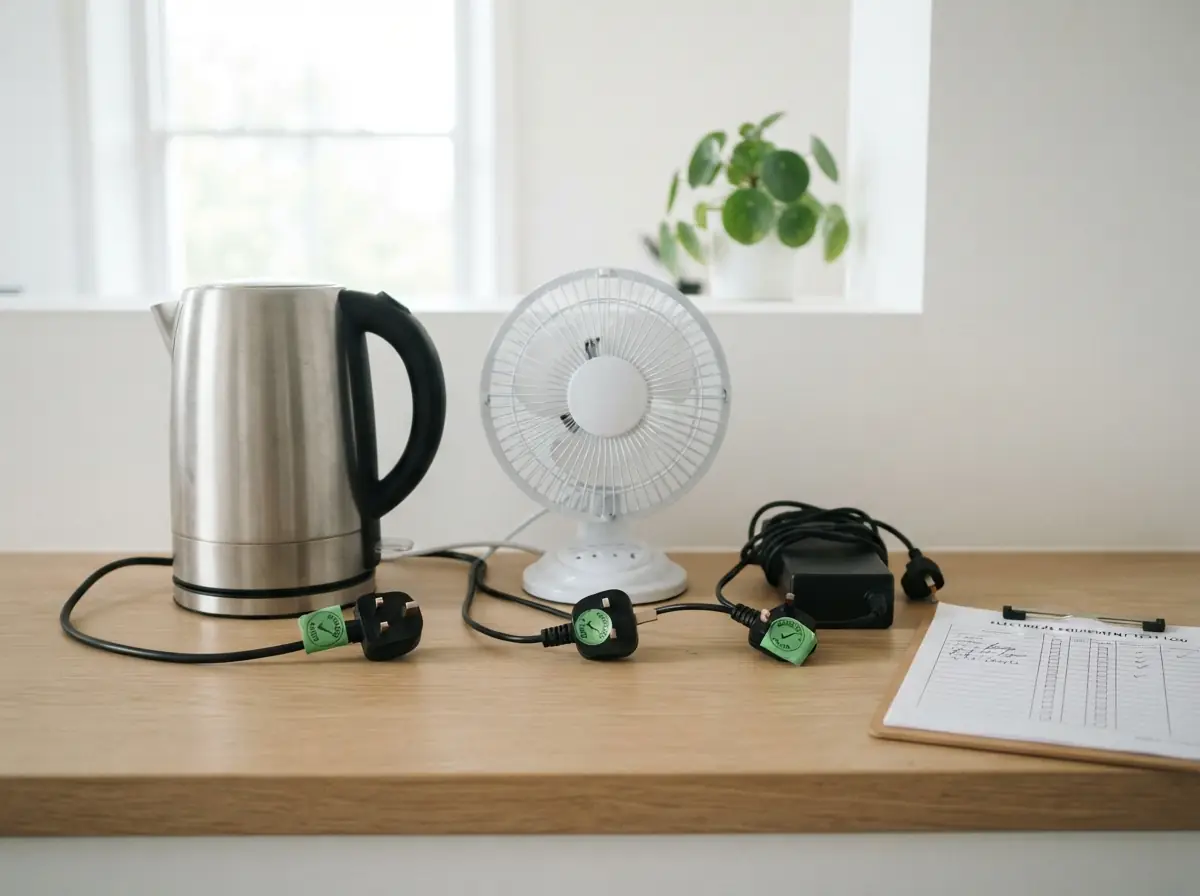
Equipment class. Class I equipment relies on an earth connection for safety (kettles, heaters, most desktop computers, anything with a metal case and a three-core lead). A broken earth is invisible, so these need electrical testing. Class II equipment is double-insulated (most chargers, laptops, lamps with plastic casings) and a visual inspection catches most of what can go wrong.
Environment. A carpeted office is kind to equipment. A kitchen, a workshop, a warehouse floor or an outdoor site is not. Heat, moisture, dust, knocks and trailing leads all shorten the interval.
Use and handling. Equipment that is moved, unplugged and carried around fails sooner than equipment that sits on a desk for years. Hand-held tools and extension leads top the list.
Typical intervals by setting
These are broad guides drawn from HSE's low-risk guidance, HSG107 and common practice. A competent engineer will set intervals for your equipment.
- Offices and shops. User checks before use. Formal visual inspection of IT equipment roughly every two to four years, and of hand-held or moveable items such as kettles and extension leads every one to two years. Combined inspection and testing of Class I items every few years; double-insulated IT equipment may not need electrical testing at all.
- Hotels, schools and public buildings. More hands on the equipment, so shorter intervals: formal inspections around annually, with testing every one to two years for earthed items.
- Workshops, kitchens and light industrial. Formal inspection every few months for hand-held tools and kitchen equipment, with combined testing around every six to twelve months.
- Construction sites. 110V tools and leads typically every three months, with daily user checks.
Set up a testing schedule
Match with a competent PAT testing engineer who will set risk-based intervals for your premises. No-obligation quote.
Extension leads and the things that get forgotten
Extension leads, multi-way adaptors and the chargers that live in a drawer are where problems hide. They are Class I, they get trodden on, coiled while warm and daisy-chained, and nobody owns them. Treat them as higher risk than the equipment they power and inspect them at least as often. An engineer will also flag overloaded sockets and leads routed under carpets, which are fire risks rather than test failures.
Making the schedule run itself
After the first visit you should have a register listing every appliance, its class, its location, the result and a recommended next-inspection date. From then on the schedule is a calendar entry, not a decision. A contractor who is also doing your EICR or fire equipment servicing can often align the visits, which is cheaper than three separate call-outs. Our guide to a statutory compliance servicing schedule shows how the dates fit together.
Getting a schedule set
ComSurv matches you with one competent PAT testing engineer who covers your area and premises type. They will inspect, test where the risk warrants it, and give you a register with the next dates. No-obligation quote in about a minute.
Sources & further reading
- HSE INDG236: Maintaining portable electric equipment in low-risk environments — suggested intervals for offices and shops
- HSE HSG107: Maintaining portable electrical equipment — the fuller guidance on inspection and testing frequencies
- HSE: PAT, answers to popular questions — no fixed interval in law
External links open in a new tab. ComSurv is a matching service, not a firm of surveyors, and is not affiliated with these organisations. This article is general information, not legal, surveying or valuation advice; take advice on your specific situation.