Who Is Responsible for the EICR: Commercial Landlord or Tenant?
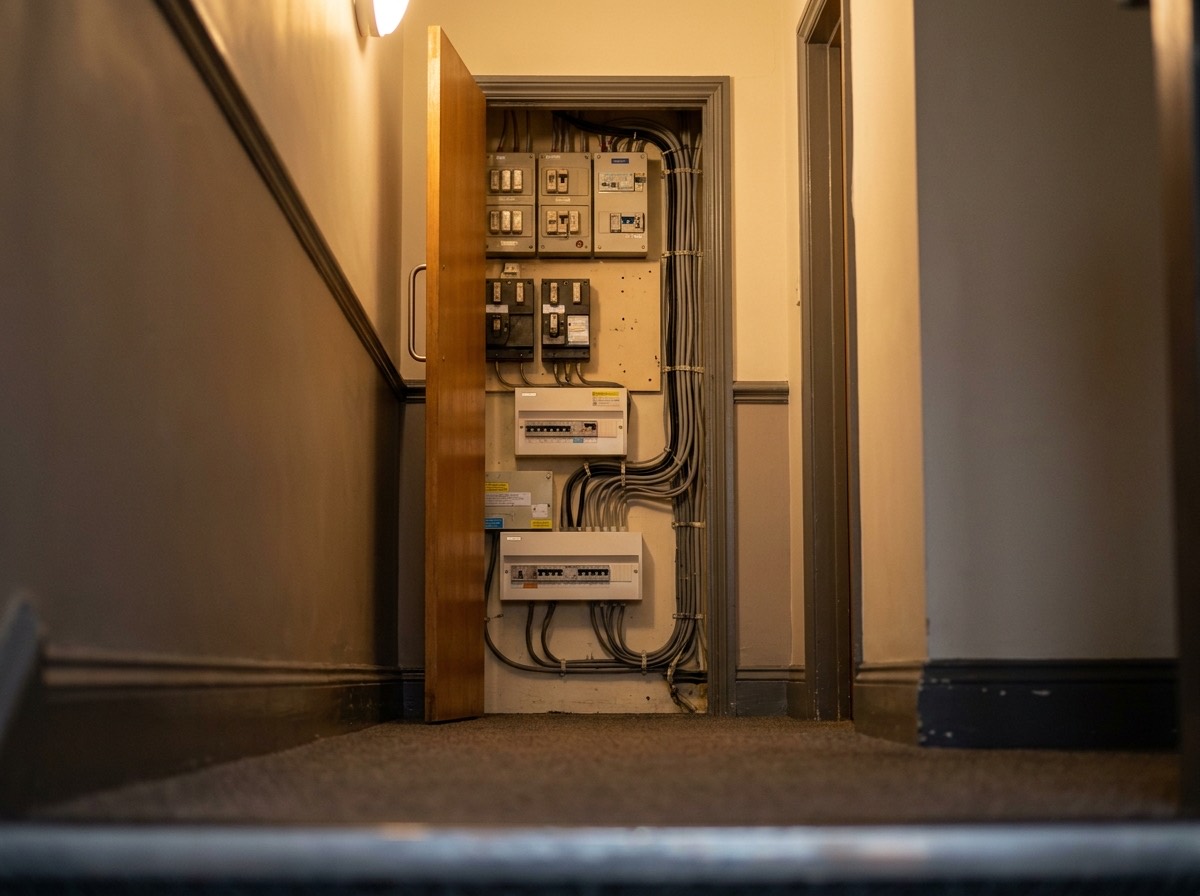
- The statutory duty falls on employers and those with control of the electrical system, which in a let building usually means the tenant for their demise and the landlord for common parts and central plant.
- The lease allocates maintenance of the installation: on a full repairing lease the tenant usually maintains the installation within the demise, including periodic inspection.
- Landlords typically inspect common parts and the landlord’s supply; a whole-building central installation may be the landlord’s to inspect and recharge.
- Letting, lease renewal and lease end are the moments to agree who holds a current EICR, and a Schedule of Condition helps at the start.
Electrical safety is one of those duties that sits in two places at once in a let commercial building. The Electricity at Work Regulations bite on the employer and on anyone in control of the installation; the lease decides who maintains what. When the two are not lined up, the EICR either gets done twice or, more often, not at all. Here is how to work out who owns it.
The statutory duty
The Electricity at Work Regulations 1989 place duties on employers, the self-employed and anyone with control of electrical systems to the extent of that control. A tenant employing staff in their unit is a duty holder for the installation they control. A landlord controlling the intake, risers and common parts is a duty holder for those. Both can be in breach for the same building if their parts are neglected.
General information, not legal advice. Your lease governs the contractual position.
What the lease usually says
Most commercial leases are full repairing, placing responsibility for the electrical installation within the demise on the tenant, including keeping it inspected and maintained. Common parts, the landlord’s supply and any central distribution are normally the landlord’s, with costs recovered through the service charge. The RICS Code for Leasing Business Premises encourages clarity on these obligations. Read your lease; if it is silent, agree the position in writing.
The practical split
- Tenant: boards, circuits and accessories within the demise, including the tenant’s fit-out and alterations.
- Landlord: intake, main switchgear, risers, common-area lighting and power, central plant, external and car-park electrics.
- Shared systems such as a building-wide fire alarm or emergency lighting: usually the landlord, with the tenant responsible for not interfering.
Sort the inspection
Match with registered electrical inspectors for your demise or common parts. No-obligation quotes.
At letting
A sensible tenant asks for a current satisfactory EICR for the demise before signing, or has one done and the findings reflected in the lease negotiation. A Schedule of Condition that records the state of the installation protects the tenant from inheriting the landlord’s C2s as their own repairing liability. Our guide to lease negotiation covers the wider points.
At lease end
The installation’s condition is part of the dilapidations picture. An unsatisfactory EICR at the end of the term is a cost the landlord will seek to recover; a satisfactory one, with certified remedials, is evidence of compliance with the repairing covenant. Tenants do well to inspect in good time before expiry.
Getting it inspected
Whichever side of the lease you are on, ComSurv matches you with registered electrical inspectors who cover your area for the parts of the building you control, with no-obligation quotes.
Sources & further reading
- Electricity at Work Regulations 1989 — the duty on employers and those in control
- RICS Code for Leasing Business Premises — fair allocation of repairing and compliance obligations
External links open in a new tab. ComSurv is a matching service, not a firm of surveyors, and is not affiliated with these organisations. This article is general information, not legal, surveying or valuation advice; take advice on your specific situation.