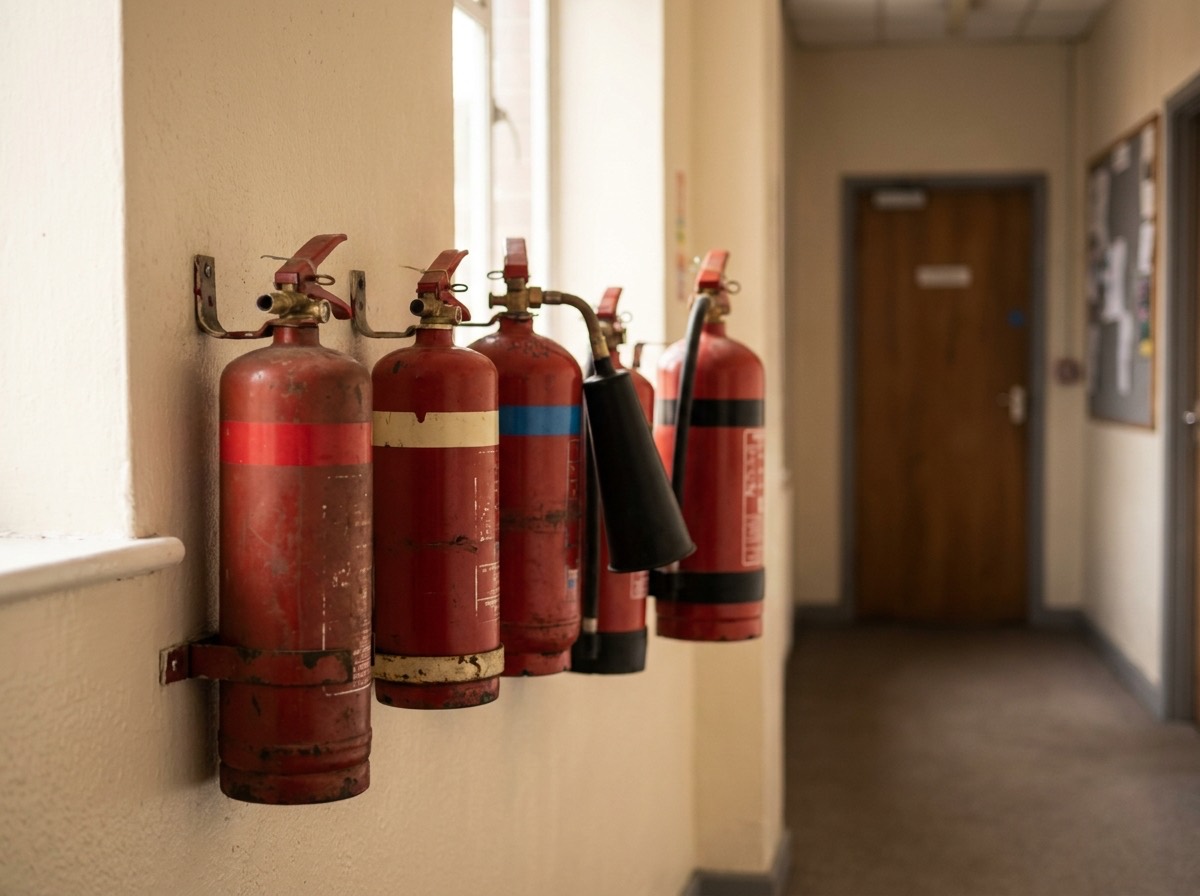
Monthly Fire Extinguisher Checks: A Simple In-House Checklist
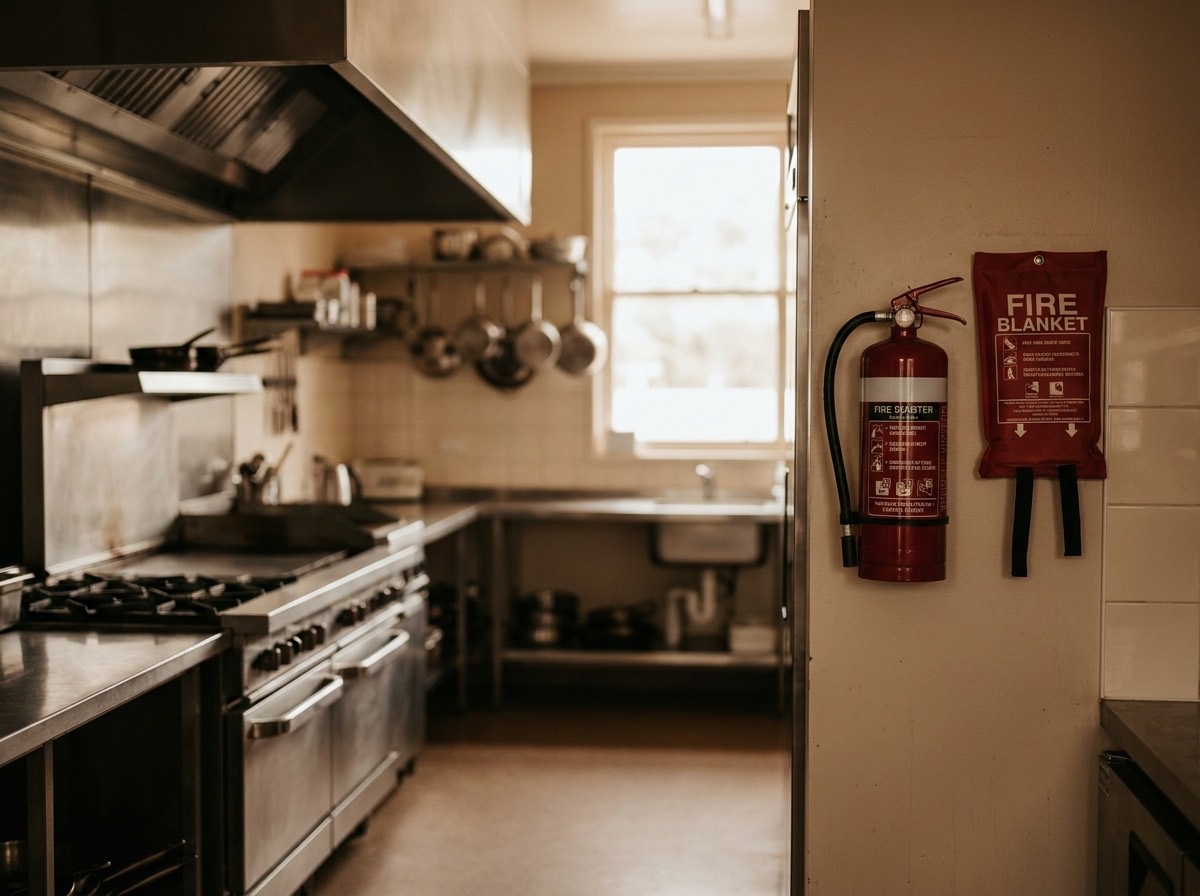
- A monthly visual check is good practice and supports the legal duty to maintain fire-fighting equipment.
- Check each extinguisher is in place, visible and unobstructed, undamaged, pinned and sealed, in the green, and within its service date.
- Record every check, including “no faults found”, in your fire log.
- Anything you cannot fix on the spot, such as low pressure or damage, means calling a competent engineer.
The annual service is the engineer’s job. The eleven months in between are yours. A monthly visual check takes a few minutes per floor, catches the obvious problems (a missing pin, a unit hidden behind a pallet, a gauge in the red) and gives you a record that shows the fire service you are managing the equipment, not just paying for it once a year.
Why monthly checks matter
The Fire Safety Order requires equipment to be maintained in working order, and government guidance expects a system of maintenance, not just an annual visit. A monthly check is the simplest system there is. It also catches the day-to-day problems an annual service never sees: stock stacked in front of an extinguisher, a unit “borrowed” for an event, a pin pulled by a curious visitor.
The monthly checklist
For every extinguisher:
- In place on its bracket or stand, in the location shown on your plan.
- Visible and unobstructed, with its sign in place.
- No damage: no dents, corrosion, perished hose or cracked horn.
- Pin and tamper seal intact.
- Pressure gauge in the green (where fitted); CO2 units have no gauge.
- Service label current, showing last annual service within 12 months.
- Operating instructions legible.
Recording the check
Keep a simple log: date, who checked, which extinguishers, any faults and what was done. “All units checked, no faults” is a valid entry and worth recording. The log sits with your Fire Risk Assessment and annual service certificates, and it is exactly what an auditor or insurer asks to see.
Book the annual service
Match with competent fire equipment engineers for servicing and supply. No-obligation quotes.
When to call an engineer
- Gauge out of the green.
- Any damage to the body, hose or horn.
- Missing pin or broken seal (the unit may have been discharged).
- A unit past its service date or extended service point.
- Any extinguisher that has been used, however briefly.
A competent engineer can service, refill or replace the unit. Our guide to servicing requirements covers what they do.
Making it stick
Put the check in the same diary slot as your emergency lighting test. Give it to a named person with a deputy. Walk the escape routes rather than ticking a list at a desk. Photograph anything odd. Five minutes a month is all it takes.
The annual service
Monthly checks complement the annual service, they do not replace it. ComSurv matches you with competent fire equipment engineers who cover your area for annual servicing and supply, with no-obligation quotes.
Sources & further reading
- Fire safety in the workplace: your responsibilities (GOV.UK) — maintenance and checks
- Regulatory Reform (Fire Safety) Order 2005, article 17 — the duty to maintain equipment
External links open in a new tab. ComSurv is a matching service, not a firm of surveyors, and is not affiliated with these organisations. This article is general information, not legal, surveying or valuation advice; take advice on your specific situation.