Fire Extinguisher Types for Commercial Premises: Which Do You Need?
- UK fire classes: A (solids), B (flammable liquids), C (flammable gases), D (metals), F (cooking oils), plus electrical risk.
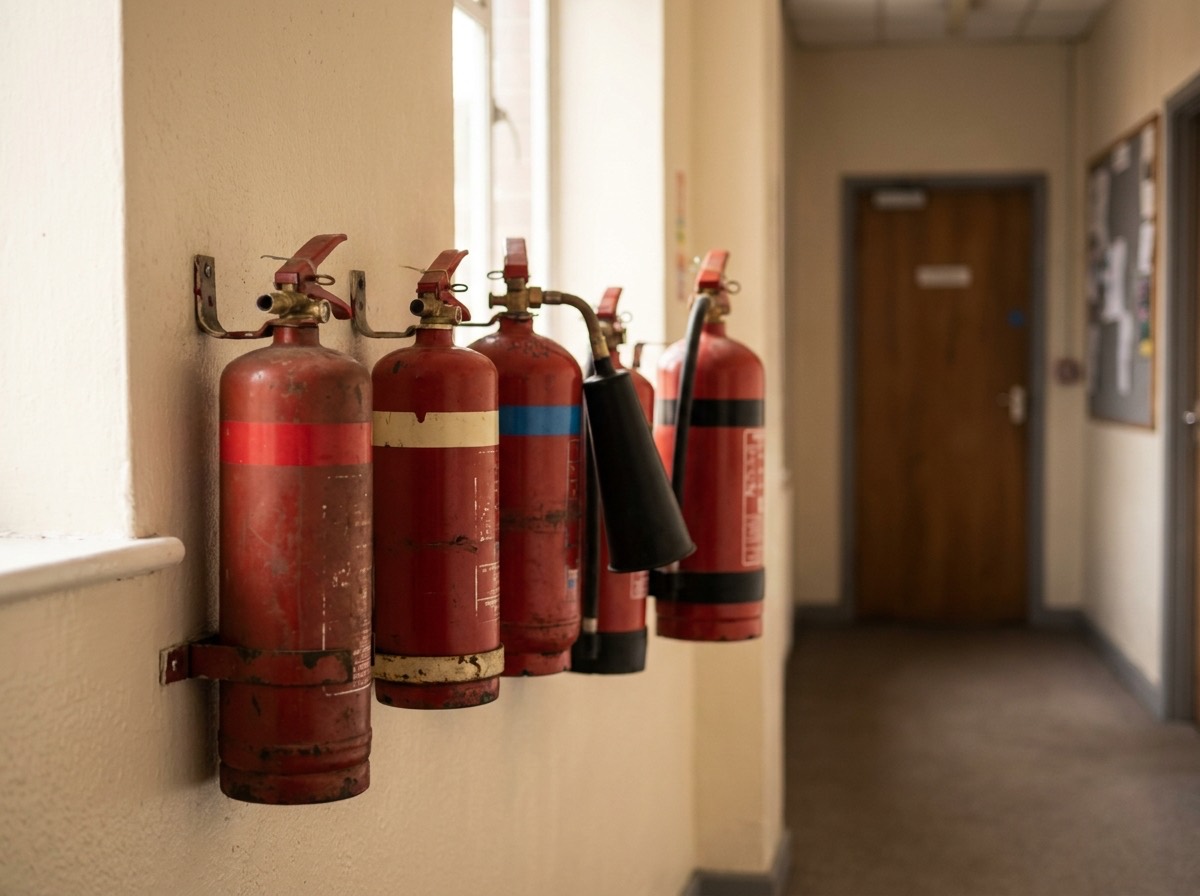
- Water (red band) for Class A; foam (cream) for A and B; powder (blue) for A, B, C and some electrical; CO2 (black) for electrical and B; wet chemical (yellow) for Class F.
- Most offices need water or foam plus CO2 near electrical equipment; kitchens need wet chemical; workshops may need foam or powder.
- Your Fire Risk Assessment decides the mix. Powder is versatile but messy and unsuitable for enclosed offices.
Every extinguisher is red in the UK, which is why the coloured band matters: it tells you what the unit will and will not put out. Use water on an electrical fire or a chip-pan fire and you have made a bad situation dangerous. Here are the fire classes, the extinguisher types, and where each belongs in a commercial building.
The UK fire classes
- Class A: ordinary combustibles such as wood, paper, textiles.
- Class B: flammable liquids such as petrol, solvents, paints.
- Class C: flammable gases.
- Class D: combustible metals.
- Class F: cooking oils and fats.
- Electrical: not a class of its own in the UK, but a risk that rules out water-based extinguishers.
The extinguisher types and colour bands
| Type (band) | Suitable for | Not for |
|---|---|---|
| Water (red) | Class A | Electrical, liquids, cooking oil |
| Foam (cream) | Class A and B | Cooking oil; caution near electrical |
| Powder (blue) | Class A, B, C; electrical | Enclosed spaces (visibility, inhalation); cooking oil |
| CO2 (black) | Electrical; Class B | Class A in open areas; cooking oil |
| Wet chemical (yellow) | Class F cooking oils; Class A | Electrical, Class B |
What an office or shop usually needs
For a typical office or retail unit the general provision is water or foam for Class A risk, with CO2 extinguishers sited near significant electrical equipment: server rooms, comms cabinets, plant. Many businesses standardise on foam plus CO2 to cover the common risks. Our guide to how many you need covers the numbers.
Get the right extinguishers
Match with competent fire equipment engineers for supply and servicing. No-obligation quotes.
Commercial kitchens
Deep-fat fryers and cooking oil are Class F, and the only extinguisher designed for them is wet chemical. Water or foam on burning oil causes a violent eruption. Every commercial kitchen should have wet chemical extinguishers and a fire blanket within easy reach, plus the general provision for the rest of the premises.
Workshops, warehouses and plant
Where flammable liquids, gases or vehicles are present, foam or powder is usually specified, with CO2 for electrical plant. Powder covers the widest range but produces a cloud that destroys visibility and is unpleasant to breathe, so it is rarely right for enclosed, occupied spaces.
The common mistakes
- Water extinguishers next to electrical equipment.
- No wet chemical in a kitchen with fryers.
- Powder in small enclosed offices.
- Extinguishers with no signage, hidden behind doors or stock.
- A provision nobody has reviewed against the current Fire Risk Assessment.
A competent engineer corrects all of these in one visit. ComSurv matches you with engineers who cover your area for supply and servicing.
Sources & further reading
- Fire safety risk assessment: offices and shops (GOV.UK) — guidance on fire-fighting equipment
- Fire safety in the workplace: your responsibilities (GOV.UK) — the duty to provide appropriate equipment
External links open in a new tab. ComSurv is a matching service, not a firm of surveyors, and is not affiliated with these organisations. This article is general information, not legal, surveying or valuation advice; take advice on your specific situation.