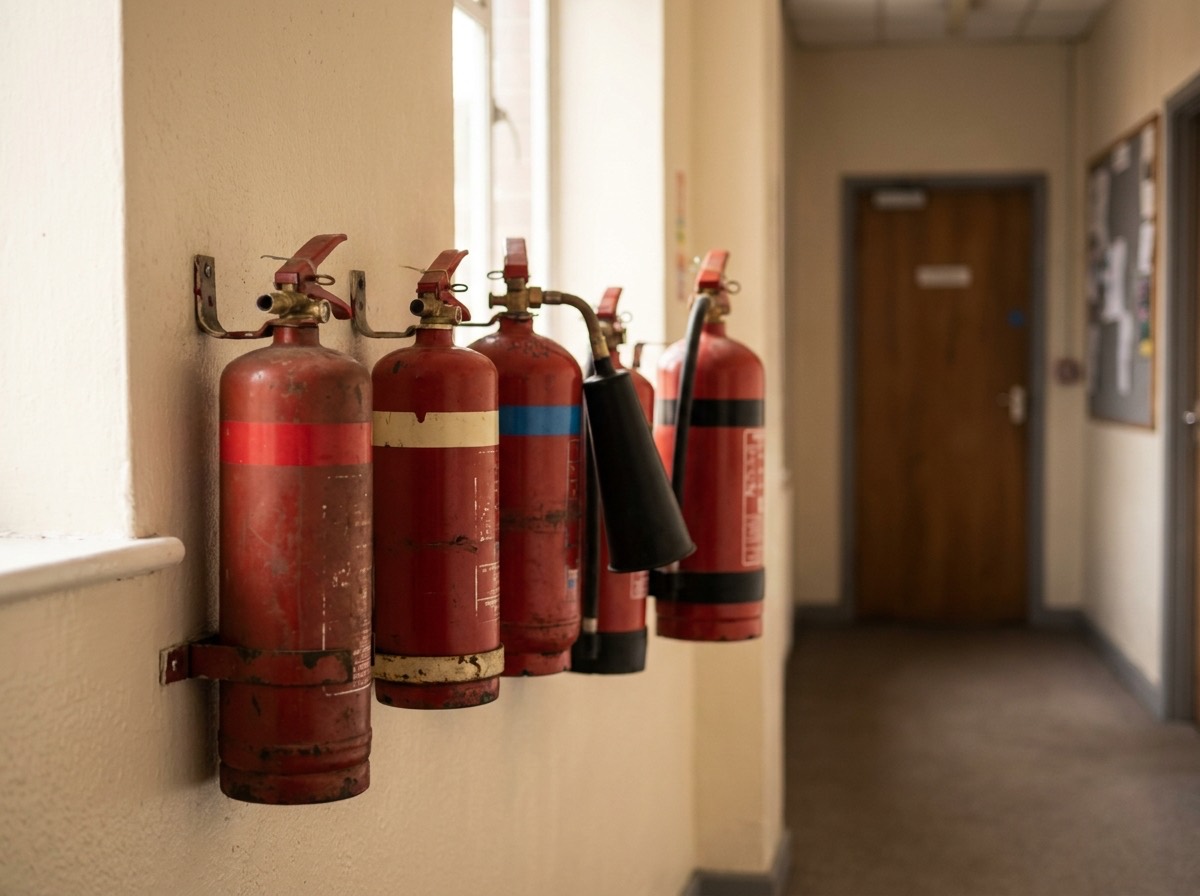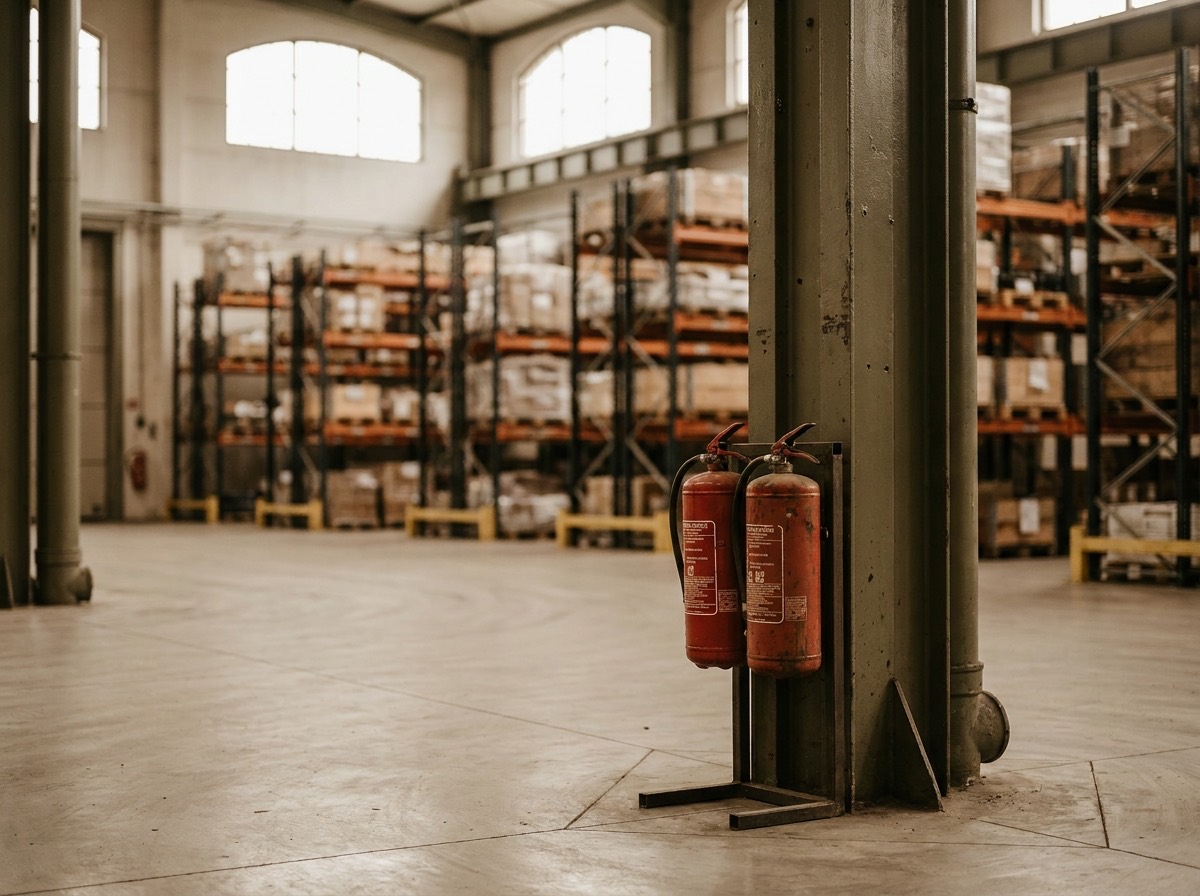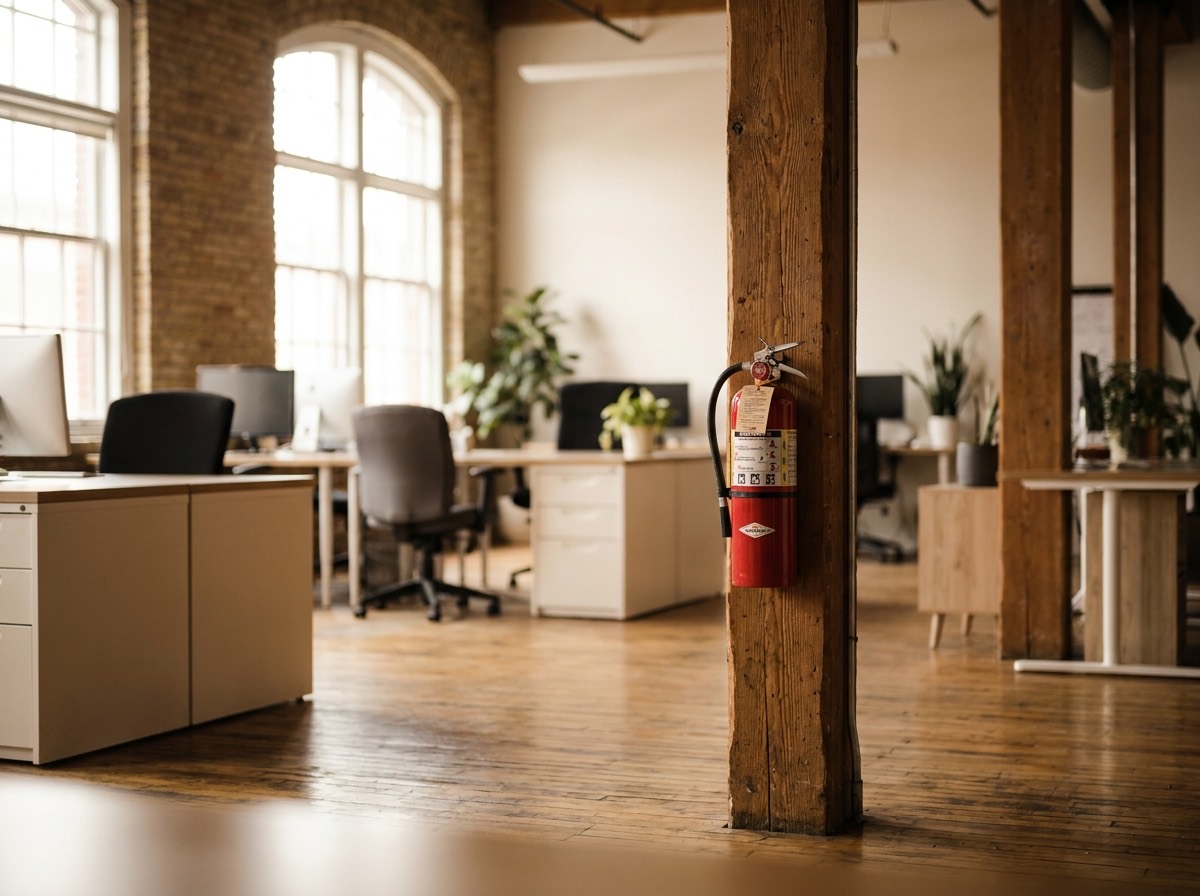
- The Fire Safety Order requires “appropriate” fire-fighting equipment. Your Fire Risk Assessment decides what that means for your premises.
- BS 5306-8 is the provision standard: broadly, a minimum fire rating per floor based on area, with no one more than about 30 metres from an extinguisher.
- Special risks need specific extinguishers: CO2 for electrical, wet chemical for commercial kitchens, foam or powder for flammable liquids.
- Two extinguishers per floor is a common minimum for small premises, but siting and type matter more than the count.
Ask a supplier how many extinguishers you need and the answer tends to be “more”. Ask the law and the answer is “appropriate”. The actual number comes from your Fire Risk Assessment and the provision standard, BS 5306-8, which works from floor area, travel distance and the fire risks present. Most premises end up with fewer, better-chosen units than a sales visit would propose.
What the law requires
The Fire Safety Order requires the responsible person to provide appropriate fire-fighting equipment where necessary to safeguard the people on the premises. “Appropriate” is defined by your Fire Risk Assessment, which identifies the fire risks and therefore the type and number of extinguishers needed. Government guidance for offices and shops expands on the expectation.
The provision standard
BS 5306-8 gives the method. For general (Class A) fire risk, it sets a minimum total fire rating per floor derived from the floor area, and requires that no one should have to travel more than about 30 metres to reach an extinguisher. In practice, for a small office floor that usually means two water or foam extinguishers; larger floors need more to cover the area and keep travel distances down. The standard also expects extinguishers on every floor and near exits.
Special risks
- Electrical equipment (server rooms, plant, switchgear): CO2 extinguishers close by.
- Commercial kitchens with deep-fat fryers: wet chemical extinguishers and a fire blanket.
- Flammable liquids or gases (workshops, stores): foam or powder as the assessment dictates.
- Vehicles and plant: often powder.
These are in addition to the general provision, not instead of it. Our guide to extinguisher types matches each to its fire class.
Get the provision right
Match with competent fire equipment engineers and assessors who cover your premises. No-obligation quotes.
Siting matters more than counting
Extinguishers belong on escape routes, near exits and close to specific risks, mounted at a sensible height, visible and signed. Ten extinguishers in a store cupboard protect nobody; four in the right places do. When reviewing provision, walk the escape routes rather than counting units.
Avoiding over-provision
Because suppliers sell extinguishers, provision tends to creep upwards. Every extra unit is another annual service fee for years. Base the number on the assessment and the standard, ask the engineer to justify anything above it, and remember that an extinguisher nobody is trained to use adds little.
Getting it right
A competent fire equipment engineer, working from your Fire Risk Assessment, will propose a provision that meets BS 5306-8 without overloading the building. ComSurv matches you with engineers who cover your area, so you can compare no-obligation quotes for supply and servicing.
Sources & further reading
- Fire safety risk assessment: offices and shops (GOV.UK) — government guidance on fire-fighting equipment provision
- Regulatory Reform (Fire Safety) Order 2005 — the duty to provide appropriate equipment
External links open in a new tab. ComSurv is a matching service, not a firm of surveyors, and is not affiliated with these organisations. This article is general information, not legal, surveying or valuation advice; take advice on your specific situation.