How Long Do Fire Extinguishers Last? Extended Service and Replacement

- BS 5306-3 requires an extended service at 5 years for water, foam and powder extinguishers and at 10 years for CO2.
- An extended service means discharge, internal inspection and refill (or pressure testing for CO2). It is often not economic on small units.
- Many businesses replace small water and foam units at 5 years and reserve extended service for larger or specialist extinguishers.
- Old extinguishers must be disposed of properly; a servicing company will usually take them away.
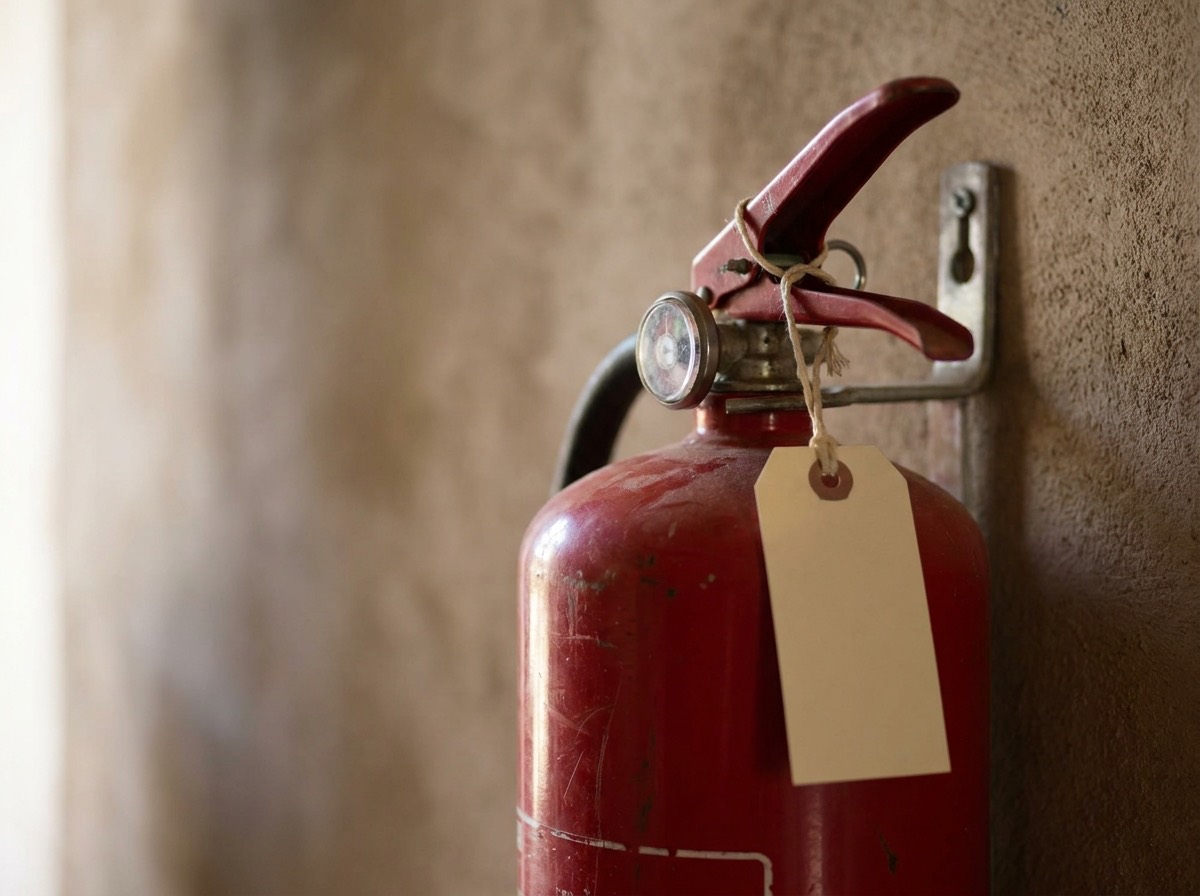
A fire extinguisher that passes its annual check can still be years past the point where the standard says it should be opened up, tested or retired. The 5-year and 10-year extended service points are where that happens, and they are where the service-or-replace decision is made. Get it right and you avoid paying to recondition a unit worth less than the work.
The extended service points
The annual basic service checks the outside of the extinguisher. The extended service looks inside. Under BS 5306-3 that falls at 5 years for water, foam and powder (discharge, internal examination, refill or replace) and 10 years for CO2 (typically hydraulic pressure testing of the cylinder, or replacement). After that, the cycle repeats until the unit reaches the end of its economic life.
Service or replace?
On a small water or foam extinguisher, the extended service can cost nearly as much as a new unit, and the new unit arrives with a fresh 5-year cycle and a warranty. On a large unit, or a specialist type, extended service is usually the better value. The honest answer depends on the size and type, and a certified engineer should give you both prices rather than defaulting to the expensive one. Our guide to servicing costs covers the pricing structure.
Signs an extinguisher should be replaced now
- Visible corrosion, dents or damage to the body.
- A gauge out of the green that does not recover after service.
- A perished hose, a damaged horn or a missing safety pin that cannot be replaced.
- A unit past its extended service date with no record of the service.
- Any extinguisher that has been discharged, even partially.
Service or replace?
Match with competent fire equipment engineers who will advise honestly on service versus replacement. No-obligation quotes.
Disposing of old extinguishers
Pressurised cylinders and their contents should not go in general waste. Servicing companies normally remove and dispose of replaced units as part of the job. Ask for that to be included in the quote, and keep the record of what was removed alongside your fire log.
Planning replacements
Your fire log should show the manufacture date and last extended service of every unit. From that, an engineer can tell you which extinguishers fall due in which year, so replacements can be budgeted rather than discovered on the day. Spreading replacements across years also avoids a single large bill.
Getting honest advice
ComSurv matches you with competent fire equipment engineers who cover your area and will quote service and replacement side by side. Compare no-obligation quotes and keep every unit within its cycle.
Sources & further reading
- Regulatory Reform (Fire Safety) Order 2005, article 17 — the maintenance duty
- BAFE — certified servicing companies
External links open in a new tab. ComSurv is a matching service, not a firm of surveyors, and is not affiliated with these organisations. This article is general information, not legal, surveying or valuation advice; take advice on your specific situation.