PAT Testing for Offices: IT Equipment, Chargers, Extension Leads and Who Is Responsible

- HSE treats offices and shops as low-risk environments, where most equipment needs periodic visual inspection rather than frequent electrical testing.
- Double-insulated IT equipment such as laptops and most chargers may not need electrical testing at all. Earthed items such as desktop PCs, kettles and heaters do.
- Extension leads, multi-way adaptors and kitchen appliances are the office exceptions and should be inspected more often.
- In a let office the tenant is responsible for its own equipment and the landlord for anything supplied with the premises or in common parts.
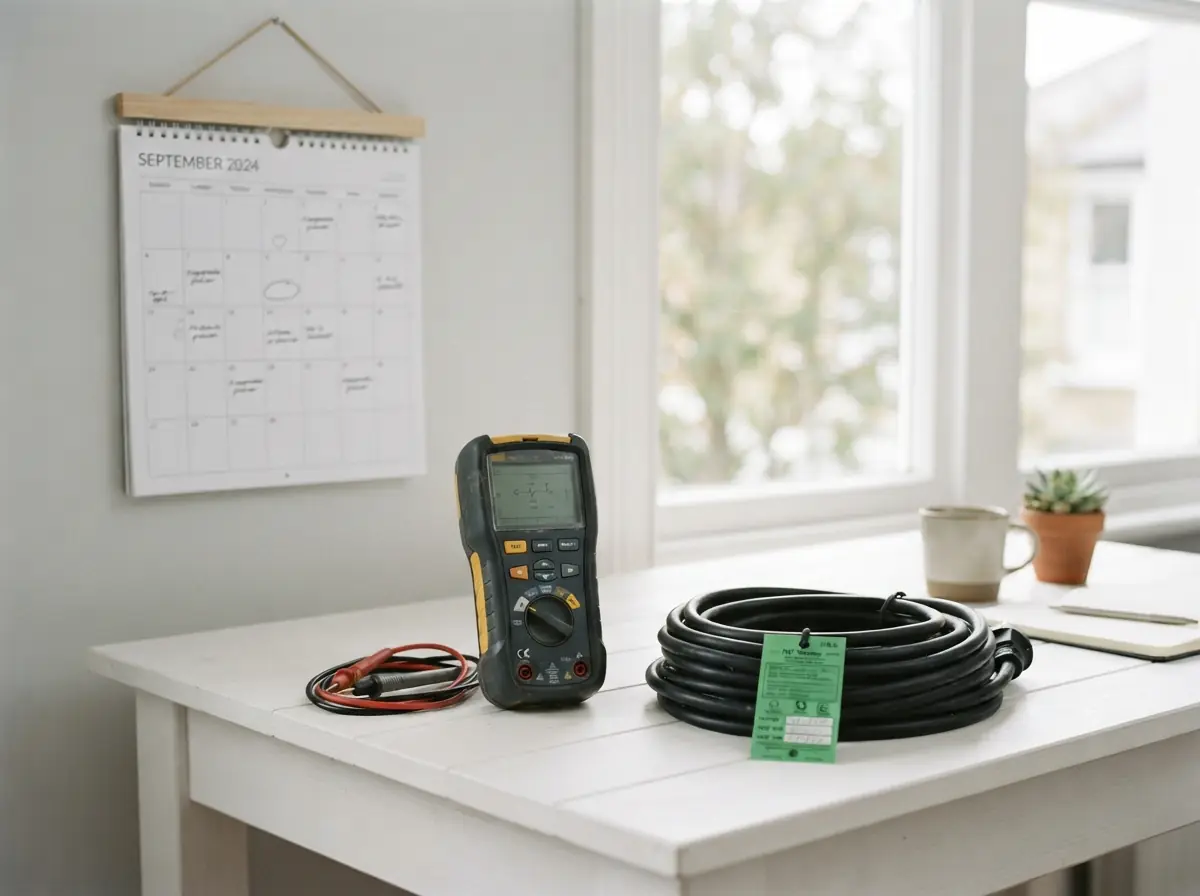
An office is about the lowest-risk electrical environment there is: dry, carpeted, climate-controlled, and most of the equipment sits on a desk for years. HSE wrote specific guidance for exactly this setting, and its message is that offices tend to over-test. That is good news for the budget, provided you know which items are the exceptions. Chargers in drawers, extension leads under desks and the kettle in the kitchen are where office electrical problems actually start.
What "low risk" means for an office
HSE's guidance for low-risk environments is written for offices, shops and similar premises. It describes a layered approach: staff look at equipment before using it, someone competent does a formal visual inspection on a schedule, and electrical testing is reserved for equipment where a visual check cannot show the fault. The intervals it suggests are long by comparison with workshops or sites. Formal inspection of IT equipment every two to four years is typical; electrical testing of earthed items every few years.
What needs testing and what only needs looking at
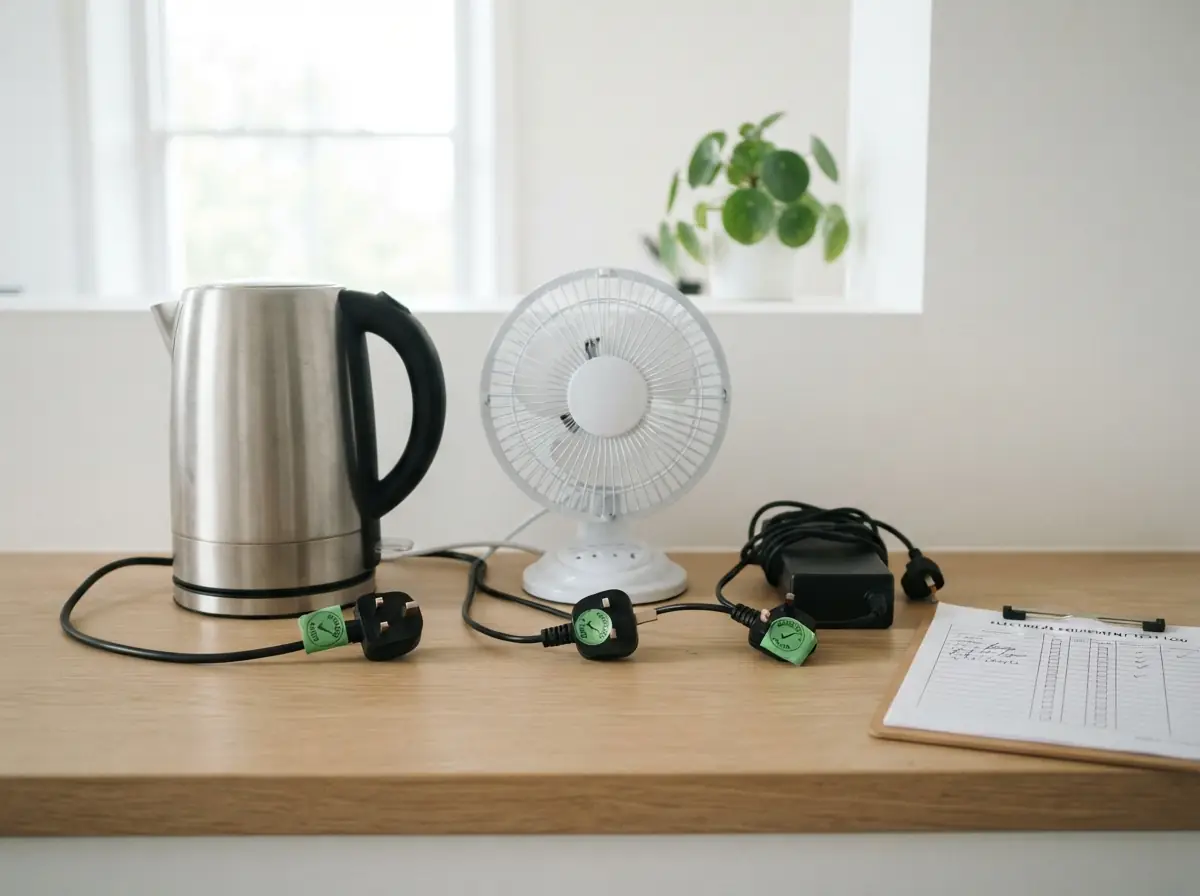
Needs electrical testing (Class I, earthed): desktop computers and some monitors, printers and photocopiers, kettles, microwaves, toasters, fridges, portable heaters, fans with metal casings, and every extension lead and multi-way adaptor.
Usually needs inspection only (Class II, double-insulated): laptops and their power supplies, phone and tablet chargers, most LED desk lamps, and most small items with a two-core lead and a plastic casing. HSE's guidance is explicit that testing these routinely is often unnecessary.
A contractor who tests every laptop charger every year is not being thorough. They are selling you work the risk does not justify.
The office hotspots
The problems in offices are rarely the computers. They are:
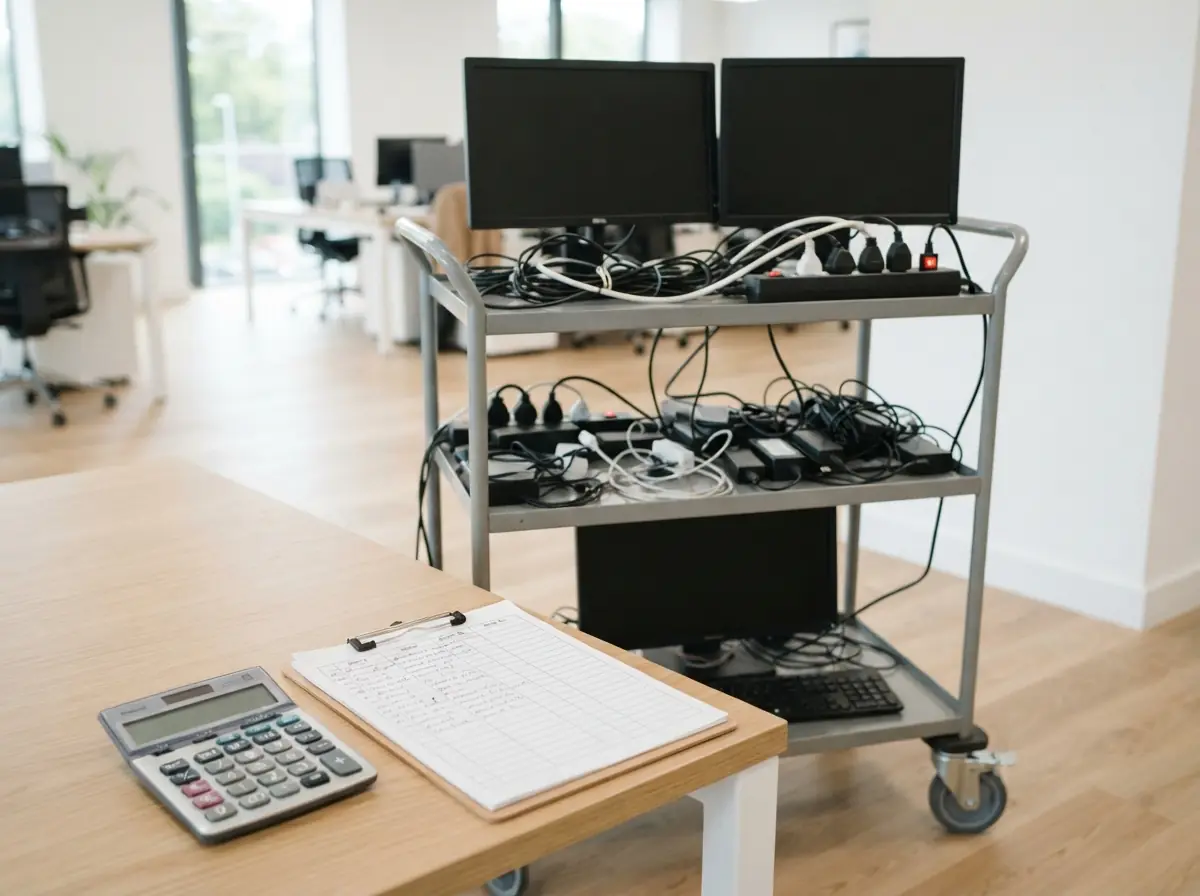
- Extension leads and adaptors under desks, daisy-chained, overloaded and trodden on. Inspect these at least annually and ban daisy-chaining.
- The kitchen. Kettles, toasters and microwaves are earthed, used constantly and sit near water. Treat the kitchen as a higher-risk zone within a low-risk building.
- Personal heaters and fans that staff bring in. Either ban them or bring them into the register.
- Chargers in drawers with frayed leads that nobody owns.
PAT testing for your office
Match with a competent engineer who applies HSE’s low-risk approach, so you pay for the testing you need. No-obligation quote.
Who is responsible in a let office
The duty under regulation 4 of the Electricity at Work Regulations follows control of the equipment. In practice:
- The tenant, as employer, is responsible for the equipment its staff use in its demise.
- The landlord is responsible for appliances it supplies with the premises (a fitted kitchen's appliances, for example) and for equipment in common parts.
- In a serviced office, the operator usually covers supplied equipment and the occupier covers anything it brings in.
None of this is automatic. Check the lease, and where it is silent, agree the split in writing. The risk is not that both sides test the same kettle; it is that neither does.
Home working and hybrid equipment
Equipment an employer provides for home working is still the employer's to maintain. Most firms handle it by asking staff to carry out user checks, bringing laptops and chargers in for formal inspection when they visit the office, and replacing rather than repairing damaged leads. Keep a note of what was issued to whom so the register stays complete.
Getting your office tested
ComSurv matches you with one competent PAT testing engineer who covers your area and applies a risk-based approach, so you pay for the inspection and testing the office needs. No-obligation quote in about a minute.
Sources & further reading
- HSE INDG236: Maintaining portable electric equipment in low-risk environments — HSE guidance written for offices and shops
- HSE: PAT, answers to popular questions — what needs testing and what does not
- Electricity at Work Regulations 1989, regulation 4 — the duty on employers and those in control of equipment
External links open in a new tab. ComSurv is a matching service, not a firm of surveyors, and is not affiliated with these organisations. This article is general information, not legal, surveying or valuation advice; take advice on your specific situation.