What Does PAT Testing Involve? Visual Inspection, Tests, Labels and the Register
- The formal visual inspection finds most faults: damaged leads, cracked casings, scorched plugs, wrong fuses, signs of overheating.
- Electrical tests depend on the class of equipment. Earthed (Class I) items need an earth continuity test; all items may get an insulation resistance test; some get a functional or leakage check.
- Failed items are labelled, recorded and taken out of use. Minor fixes such as a fuse or plug are often done on the spot.
- The register should list every item with its location, class, result, test readings where taken and the recommended next date.
Most people's experience of PAT testing is a green sticker appearing on the kettle. The sticker is the least important part. Behind it there should be a methodical inspection of each appliance, electrical tests chosen to suit the type of equipment, a decision on anything that fails, and a register that tells you what was checked and when it is next due. If you know what a proper visit looks like, you can tell whether you are getting one.
Before the visit
The engineer needs to know roughly how many appliances there are, where they are, and whether any areas need out-of-hours access. If you have an asset list from a previous visit, share it. If not, the first visit creates one. Tell staff what is happening so equipment is available and nobody unplugs a server mid-test.
The formal visual inspection
This is the part that catches most problems, and HSG107 treats it as the core of the process. For each item the engineer checks:
- the plug: casing, pins, cable grip and that the fuse is the right rating for the appliance;
- the lead: cuts, kinks, taped repairs, exposed inner cores, damage where it enters the plug or appliance;
- the appliance: cracked or loose casing, missing covers, signs of overheating or burning, blocked vents;
- the environment: overloaded sockets, leads under carpets or across walkways, equipment used in wet or dusty areas it was not designed for.
Anything found at this stage can fail the item before a single test is run.
The electrical tests
Tests are run with a portable appliance tester, and which tests apply depends on the class of equipment.
- Earth continuity (Class I only): confirms the earth path from the plug pin to the metal casing is intact and low resistance. A failed earth is the dangerous invisible fault PAT testing exists to find.
- Insulation resistance: confirms the live parts are properly insulated from the casing and the earth. Applied to Class I and Class II items.
- Functional check: the appliance is switched on to confirm it works and draws a sensible current.
- Leakage or touch current tests: used for some equipment, particularly IT equipment where a standard insulation test could cause damage.
- Polarity and lead tests: for detachable leads and extension leads, which are tested as items in their own right.
The engineer records the readings, not just pass or fail, so a slow decline can be seen across visits.
Labels, fails and remedials
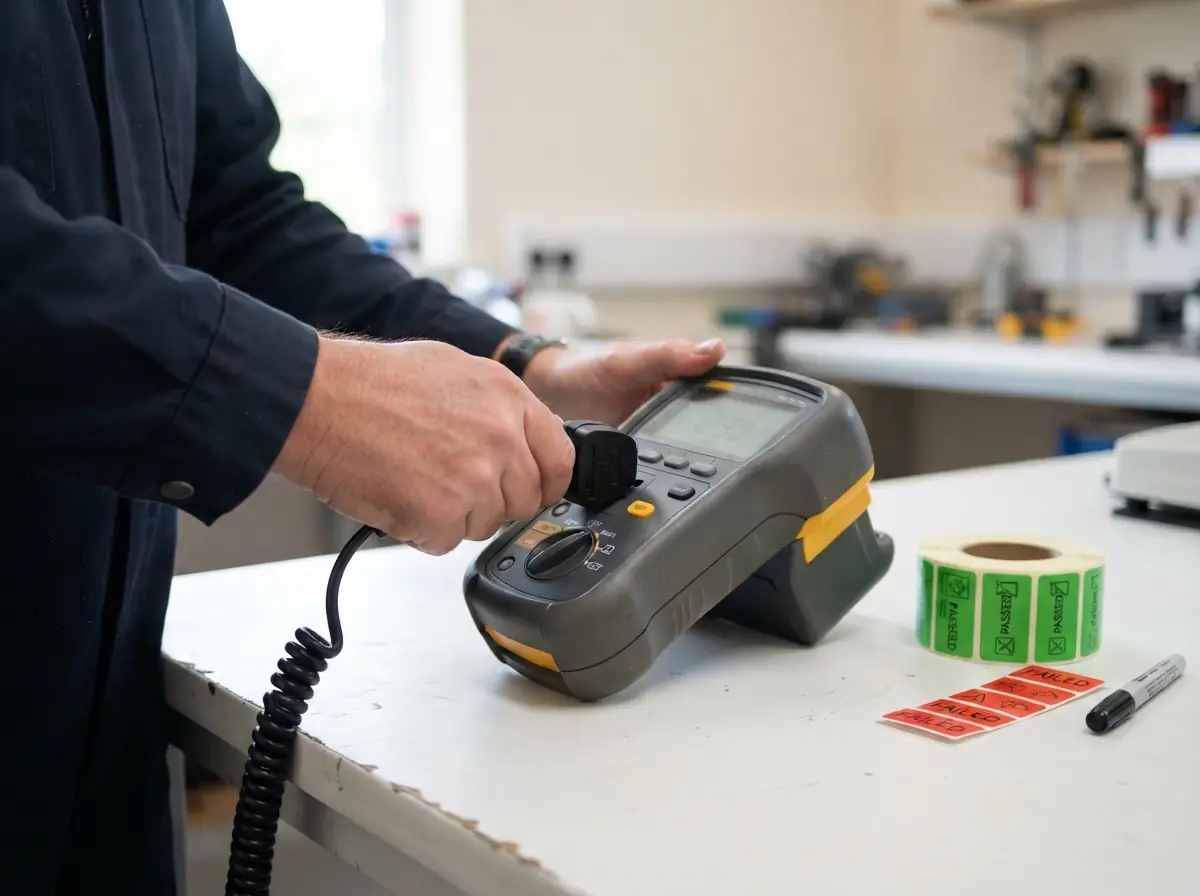
Each item gets a label with the result, the date and usually a reference number matching the register. Failed items get a different label and should be removed from use. Many failures are simple: a wrong fuse, a damaged plug, a lead that needs replacing. Most engineers will fix those on the spot for a small charge if you have agreed it in advance. Anything beyond that, such as an appliance with internal damage, is condemned or referred for repair.
Book a PAT testing visit
Match with a competent engineer who inspects, tests, labels and gives you a proper register. No-obligation quote.
The register you should receive
This is the deliverable. It should list every appliance with an ID, a description, its location, its class, the inspection and test results with readings, any remedial action, and a recommended next-inspection date. It is what you show an insurer, a landlord or an inspector, and it is what makes the next visit quicker because the engineer knows what is where. If a contractor offers labels but no register, that is not PAT testing.
Who is competent to do it
The Electricity at Work Regulations require anyone working on electrical systems to have the knowledge and experience to do so safely. For PAT testing that means understanding equipment classes, knowing which tests apply, using the instrument correctly and being able to interpret results. User checks and formal visual inspections can be done in-house with training. Combined inspection and testing is usually contracted out.
Booking a visit
ComSurv matches you with one competent PAT testing engineer who covers your area and premises type. Tell us about the equipment and get a no-obligation quote in about a minute.
Sources & further reading
- HSE HSG107: Maintaining portable electrical equipment — the inspection and testing process in detail
- HSE INDG236: Maintaining portable electric equipment in low-risk environments — user checks and formal visual inspection
- Electricity at Work Regulations 1989, regulation 16 — the competence requirement for electrical work
External links open in a new tab. ComSurv is a matching service, not a firm of surveyors, and is not affiliated with these organisations. This article is general information, not legal, surveying or valuation advice; take advice on your specific situation.