Guides · New Premises
Opening a Café or Restaurant: The Premises Checklist Before You Serve Anyone
Key takeaways
- Register the food business with the council at least 28 days before you open. It is free, it cannot be refused, and it cannot be rushed.
- Commercial catering gas needs its own annual certificate, a CP42, from a Gas Safe engineer with commercial catering categories. The landlord’s record does not cover your kitchen.
- Check the alterations clause and the permitted use before you commit to a unit. Extraction ducting and flues are the most common fit-out the lease blocks.
- Alcohol, hot food after 11pm, recorded music and outside tables each need a separate licence with its own lead time.
A café or restaurant is the hardest kind of business to open in a commercial unit, because more of the law attaches to the premises than to anything else you do. Food registration has a fixed clock. The kitchen gas needs a certificate the landlord’s paperwork will not cover. The extract system you need may not be allowed under the lease as written. This guide takes the general checklist in our guide to moving a business into commercial premises and works through the parts that are specific to food.
Start with the dates that cannot move
Our main checklist covers the duties every tenant takes on. Three timelines run in the background of a food business opening on top of those, and none of them care about your launch date.
- Food business registration: 28 days. You must register with your local authority at least 28 days before you start trading. There is no fee and the council cannot turn you down, but trade without registering and you are committing an offence. Register as soon as you have a completion date for the lease.
- Premises licence: around two months. If you will sell alcohol, serve hot food or drink between 11pm and 5am, or play recorded music to the public, you need a premises licence under the Licensing Act 2003. The application has a 28-day consultation period, must be advertised at the premises and in a local paper, and goes to a hearing if anyone objects. For alcohol you also need a named designated premises supervisor who holds a personal licence.
- Pavement licence: a few weeks. Tables and chairs on the public pavement need a pavement licence from the council, with its own consultation period and fee.
Put these three on the plan first. Everything in the rest of this guide fits around them.
The lease clauses that bite a food business
Our guide to compliance checks before signing a lease covers the paperwork every tenant should ask for. Food businesses need to read four clauses harder than anyone else.
Permitted use. In England, cafés and restaurants sit in Class E alongside shops and offices, so moving from a shop to a café usually needs no planning permission. The lease is a different matter. If the permitted use says “retail” and nothing else, you need the landlord’s agreement before you sign, not a verbal nod. The Planning Portal explains the planning side, and a hot food takeaway is a separate use class that does need permission.
Alterations. Commercial extraction is the fit-out most often blocked. A canopy, a duct through the building and a flue at roof level all touch the structure and often the landlord’s retained parts. Get written consent in principle before completion, with the duct route agreed. If the landlord will not allow a duct, walk away or budget for a recirculating system, which will limit what you can cook.
Nuisance and hours. Most leases include a covenant against causing nuisance to neighbours, and odour, noise and late deliveries are the three a restaurant produces. Check for restrictions on opening hours and on deliveries.
Repair. A kitchen wears a unit faster than any other use: grease, heat, water and heavy equipment on the floor. Under a full repairing lease that wear is yours to put right. A schedule of condition taken before the kitchen goes in caps that liability at the state you inherited and is the single most useful document a food tenant can hold at lease end.
The kitchen: gas, extraction and fire
The commercial kitchen is where a general compliance checklist stops being enough.
Gas. Commercial catering gas is a separate competence from the domestic boiler work most engineers hold. Every appliance and the pipework need an annual inspection by a Gas Safe engineer with commercial catering categories, recorded on a CP42 certificate. The HSE’s catering gas safety sheet also expects a gas interlock on new installations, so that the gas supply shuts off if the extraction stops. The environmental health officer will ask for the CP42 at your first inspection, and so will your insurer. See commercial gas safety certificates for how the inspection works.
Extraction. The HSE’s guidance on catering kitchen ventilation sets out what the system has to achieve: capture at the cooking line, make-up air, and a duct that can be cleaned along its whole length. Grease in ductwork is a leading cause of restaurant fires, and insurers commonly make regular duct cleaning, with records, a condition of cover. Design the duct with access panels from the start.
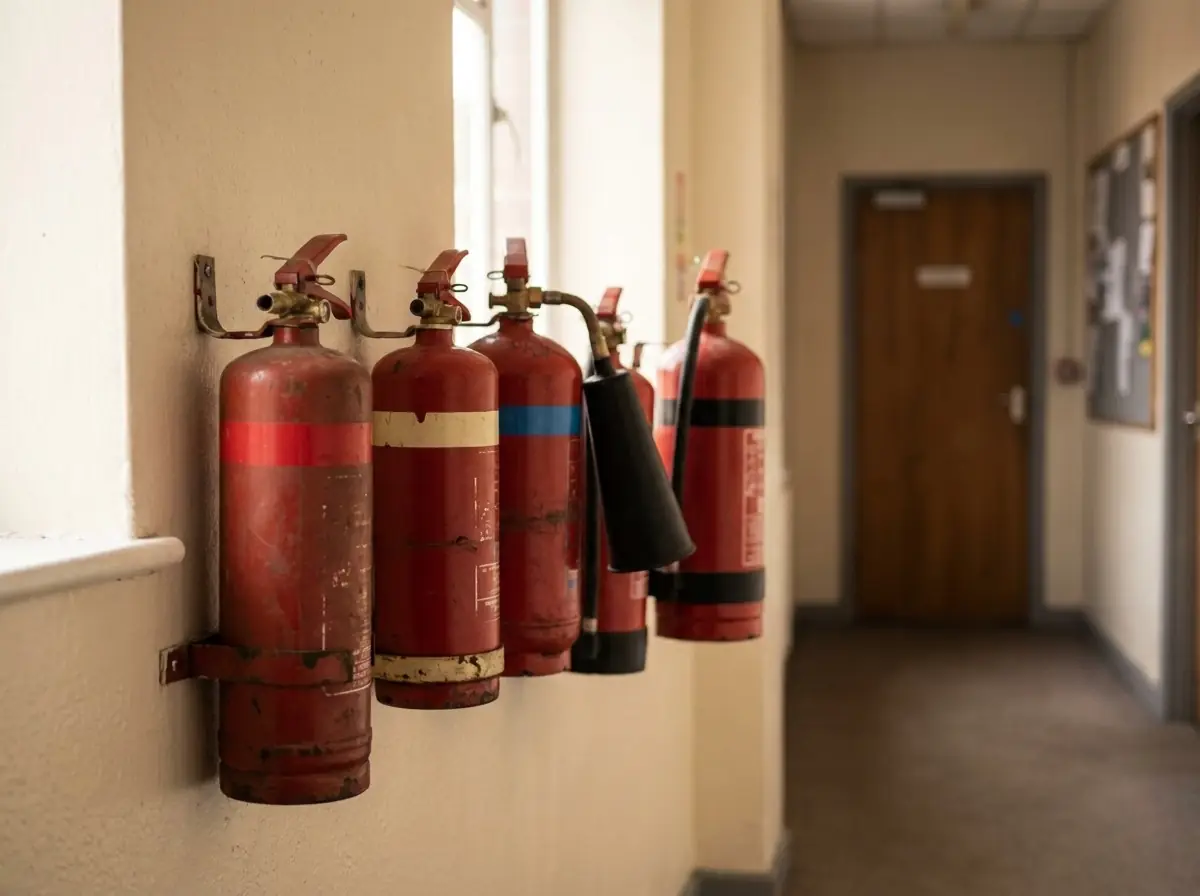
Fire. Your fire risk assessment under article 9 of the Fire Safety Order has to deal with the kitchen specifically: the cooking line, the duct, the gas shut-off, the escape route past the kitchen and the number of people in the dining room. Kitchens need wet chemical extinguishers for cooking oil and a fire blanket within reach, on top of the general cover for the rest of the premises. Our guide to fire extinguisher types explains which go where, and a larger kitchen may need a suppression system over the cooking line.
Electrical, water and everything you plug in
Electrical. A kitchen often needs more supply than the unit has. Check the incoming supply capacity before you order equipment, and get an EICR on the existing installation before the fit-out starts, because you do not want to discover the board needs replacing after the new circuits are in. Every new circuit the fit-out adds must be certified on an Electrical Installation Certificate, which you file with the EICR.
Portable appliances. Catering equipment is used hard, gets wet and moves around, so it sits at the frequent end of the PAT testing scale. Test everything before opening and set the interval by risk, with hand-held and kitchen items tested most often.
Water. A legionella risk assessment is required for any premises with a water system, and a kitchen has several: hot water, cold water storage, and outlets that may stand unused between services. Keep a simple log of temperature checks and flushing. If the building has a shared tank in the roof, ask the landlord for the assessment that covers it.
Compliance Check
Check the unit before the kitchen goes in
Run the free compliance check on the premises you are taking. You get the list of what a food business will need there, with a quote for each from a provider who covers your area.
Food registration and the first inspection
Once you have registered, the local authority will inspect, often within weeks of opening. The inspection scores your food hygiene rating, which you display in the window and which customers now check before they book. Three things decide that score, and all three can be ready before day one.
- A written food safety management system. The Food Standards Agency’s Safer food, better business pack is free and is what the inspector expects to see in a small or medium kitchen, filled in from your first day of trading, including the diary.
- Allergen information. You must be able to tell a customer which of the 14 allergens each dish contains, and food you pack on site for sale needs a full ingredients label under the prepacked for direct sale rules.
- The premises itself. Washable surfaces, separate hand-wash basins, pest proofing, probe thermometers, and the gas and fire paperwork above. The inspector can and does ask to see the CP42 and the fire risk assessment.
Waste is part of the same picture. A food business cannot use household bins. You need a commercial waste contract with transfer notes, and in England workplaces must now separate food waste for collection under Simpler Recycling. Used cooking oil goes to a licensed collector, never down the drain.
The other licences: music, signs and the street
Alcohol is the licence everyone remembers. These are the ones that get missed.
- Music. Playing recorded music to customers, including the radio, needs TheMusicLicence from PPL PRS, which covers both the performers’ and the writers’ rights in one licence. Live music and some recorded music also count as regulated entertainment under the Licensing Act, with exemptions for smaller venues at certain hours.
- Late night refreshment. Serving hot food or hot drink to the public between 11pm and 5am is licensable in its own right, even without alcohol. If you plan late opening, build it into the premises licence application.
- Signs and A-boards. A fascia sign and a projecting sign usually benefit from deemed consent under the advertisement regulations, within size and illumination limits. A-boards on the pavement are a highways matter and many councils license or prohibit them. Check the lease too, because the signage clause often requires the landlord’s approval of design.
- Outside seating. Covered above under pavement licences. Note that the licence usually requires you to keep a clear route for pedestrians and wheelchair users, and the council can revoke it if you do not.
Taking payments on a busy Saturday
A card machine that drops out at the counter during service costs you the queue. Four checks before you open.
- Order the terminal early enough to test it on the premises, on the internet connection you will actually use. A unit that was empty for months may have no live broadband line, and a new line can take weeks.
- Confirm the terminal integrates with your till or EPOS, so the amount is sent to the machine rather than typed in twice. Typing errors on a busy shift become refunds and chargebacks.
- Decide how tips and service charges will be taken, and make sure the terminal and the till agree.
- Take a live test payment and a refund before the first customer arrives.
We have partnered with DOJO, the UK’s No.1 payments provider, so you can get a quote while you are sorting out the rest of the premises.
What comes round again in year one
Set these in the diary on the day you open, because the environmental health officer, the fire service and your insurer will each ask for the records.
- The CP42 gas certificate: annual.
- Extraction duct cleaning: at the interval your insurer sets, with certificates kept.
- Fire extinguisher service: annual. Fire risk assessment: reviewed when the kitchen, the layout or the opening hours change.
- PAT testing: at the interval you set by risk, with kitchen items most often.
- Legionella: assessment reviewed at least every two years, with the temperature log kept up weekly or monthly.
- EICR: at the interval the inspector recommends, typically up to five years for a shop or café.
Our compliance calendar has every interval in one place, and the free compliance check gives you the list for your specific unit with a quote against each line.
Sources & further reading
- GOV.UK: register a food business at least 28 days before you open
- Food Standards Agency: Safer food, better business the free food safety management pack the inspector expects to see
- Food Standards Agency: food hygiene rating scheme how the rating is scored and displayed
- Food Standards Agency: allergen guidance for food businesses the 14 allergens and the labelling rules
- HSE: CAIS23, gas safety in catering and hospitality commercial catering gas, interlocks and competence
- HSE: CAIS10, ventilation of kitchens in catering establishments what extraction has to achieve
- Regulatory Reform (Fire Safety) Order 2005, article 9 the fire risk assessment duty
- Licensing Act 2003 alcohol, late night refreshment and regulated entertainment
- GOV.UK: alcohol licensing premises licences and personal licences
- GOV.UK: pavement licences guidance tables and chairs on the highway
- GOV.UK: Simpler Recycling in the workplace separate food waste collection for workplaces in England
- Planning Portal: change of use Class E and when permission is needed
Questions
Frequently asked questions
How far in advance do I need to register a café or restaurant?
At least 28 days before you start trading, with your local authority. Registration is free and cannot be refused, but trading without it is an offence. Register as soon as you have a lease completion date.
What is a CP42 certificate and do I need one?
A CP42 is the commercial catering gas safety certificate issued after a Gas Safe engineer with commercial catering categories inspects the kitchen appliances and pipework. If you have any gas catering equipment you need one before you open and every year after. The landlord’s gas record for the building does not cover it.
Do I need planning permission to turn a shop into a café?
In England, usually not, because shops and cafés both sit in Class E. A hot food takeaway is a separate use class and does need permission. The lease is separate from planning, so the permitted use clause must allow a café as well.
Do I need a licence to play music in my café?
Yes. Playing recorded music, including the radio, to customers needs TheMusicLicence from PPL PRS. Live music and some recorded music can also count as regulated entertainment under the Licensing Act 2003, depending on the time and the size of the venue.
Who is responsible for fire safety in a rented restaurant unit?
You are, for the space you occupy, from the day you take the keys. The fire risk assessment must cover the kitchen specifically, including the cooking line, the extract duct and the gas shut-off. The landlord usually remains responsible for common parts and shared systems in a multi-let building.
What will the environmental health officer ask to see at the first inspection?
Your food safety management system, usually the Safer food, better business pack, filled in from day one; allergen information for every dish; the CP42 gas certificate; the fire risk assessment; pest control arrangements; and your waste contract. The inspection sets your food hygiene rating.