Guides · New Premises
Taking a Workshop or Industrial Unit: The Premises Checklist
Key takeaways
- Read the repairing clause against the roof. An asbestos cement roof under a full repairing lease is the most expensive thing a small industrial tenant can inherit.
- Get the asbestos register before completion and a refurbishment survey before any work touches the fabric. Pre-2000 industrial buildings almost always contain it.
- Three-phase supplies need fixed wire testing by an inspector who works on them. Ask for the last report, and expect to commission your own.
- Compressors, lifting equipment, flammables and refrigerants each bring a statutory inspection or record. Set them up before the kit is switched on.
Industrial units are cheaper per square foot than anything on the high street, and the reasons are written into the building. The roof may be asbestos cement. The supply is three-phase and the installation may not have been tested since it went in. The yard drains somewhere. And the equipment you bring in, from a compressor to a forklift, carries its own inspection regime from the day it arrives. This guide works through the premises checklist for a first workshop or industrial unit, on top of the duties in our main guide.
Before you sign: use class, the roof and the yard
Our main checklist and our guide to compliance before signing a lease cover the paperwork. For an industrial unit, three things need more attention.
Use class. In England, light industrial use that can sit in a residential area without harm is within Class E. Heavier processes are Class B2, and storage and distribution is Class B8. The Planning Portal sets out the classes. A noisy, dusty or odorous process in a Class E unit may need planning permission, and the lease will have its own permitted use and often an hours and nuisance clause tied to the estate.
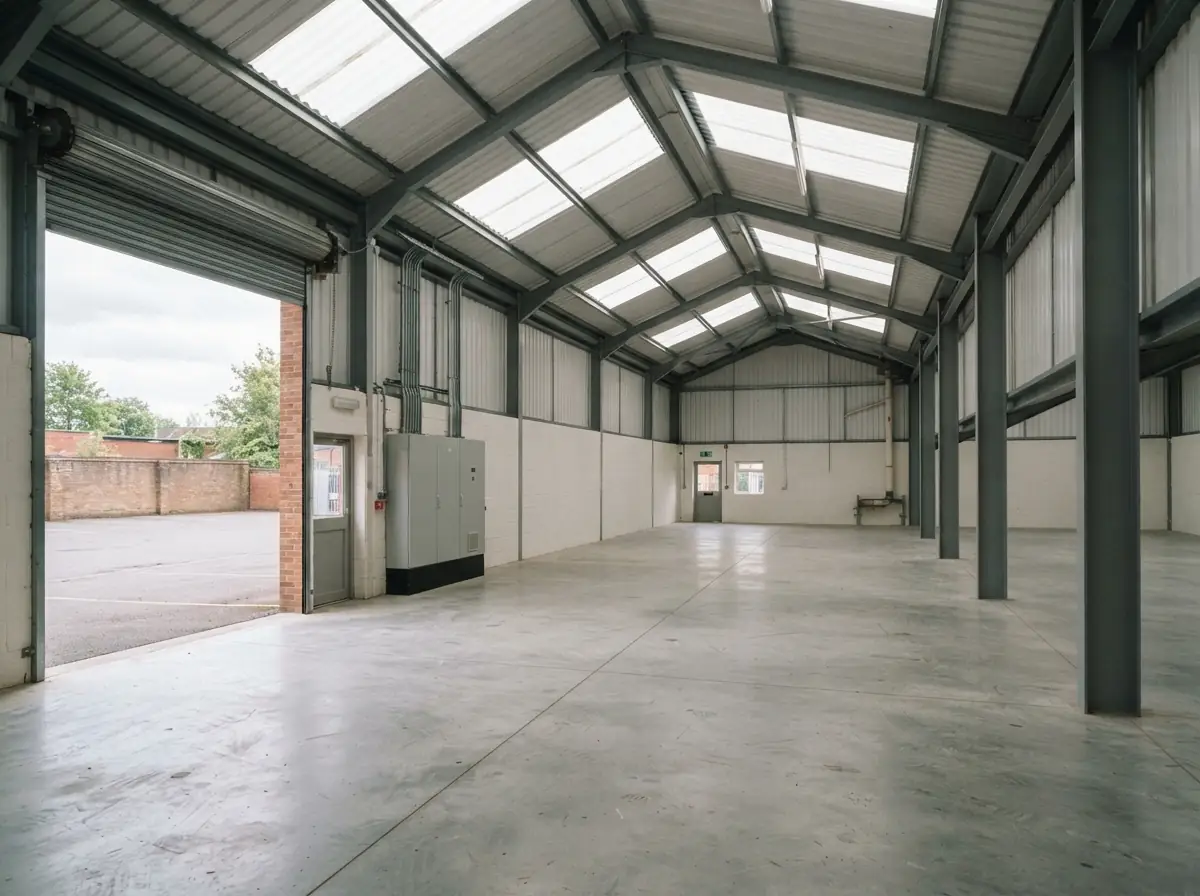
The roof. Under a full repairing lease the roof is yours to keep in repair, and on an older unit that roof is often asbestos cement sheeting with rooflights at the end of their life. Replacing it is a five-figure job that the lease can land on you. Get a building survey that looks at the roof, and a schedule of condition that records its state in detail, with photographs of every sheet and gutter. Our cost guide shows what it costs against what it saves.
The yard and the drains. Check what the lease includes, where the surface water goes, and whether there is an interceptor. If your process involves oils, solvents or wash-down, the drainage becomes a permit question, covered below. On an estate, check the service charge for the shared roads and lighting against the RICS professional statement on service charges.
Asbestos in the fabric
Industrial buildings built before 2000 are the most likely of any type to contain asbestos: in cement roof and wall sheets, in gutters and downpipes, in insulating board around boilers and electrical cupboards, in floor tiles and in pipe lagging. Under regulation 4 of the Control of Asbestos Regulations 2012 the duty to manage it sits with whoever controls the premises, which under most leases is you for the inside of the unit and the landlord for the structure, depending on the repairing clause.
- Ask for the asbestos register and management plan before completion. If there is none, commission a management survey before you move in. Our guide to the register and management plan explains what they should contain.
- Before any work that disturbs the fabric, including drilling into walls for racking or cable trays, get a refurbishment survey of the areas affected under the HSE’s HSG264. See when a refurbishment survey is needed.
- Treat an asbestos cement roof as a working-at-height and asbestos problem together. Nobody walks on it, and the HSE’s asbestos essentials task sheets cover what can be done on it and how.
Our guide to where asbestos is found in commercial buildings has the full list for industrial premises.
Three-phase supply and fixed wire testing
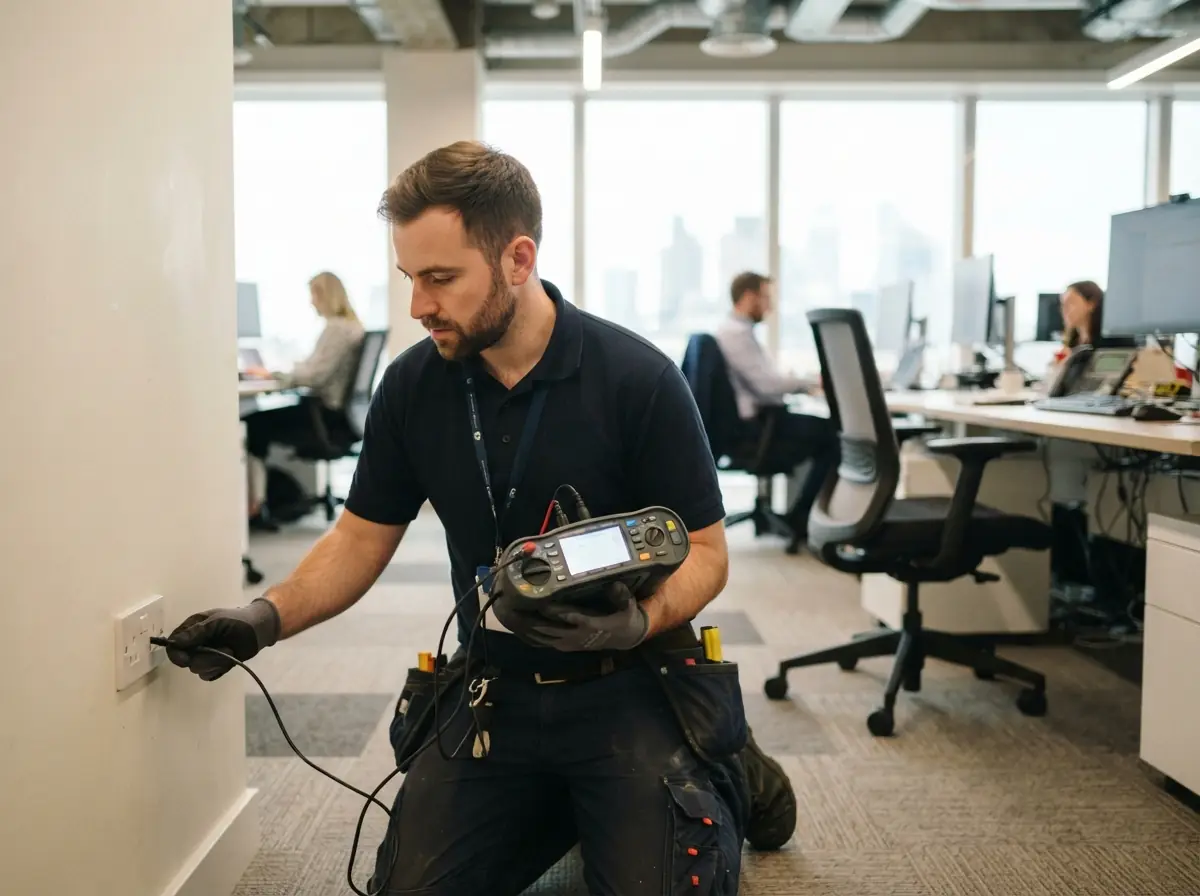
Most industrial units have a three-phase supply and a distribution board that has been added to by every tenant since the unit was built. Regulation 4 of the Electricity at Work Regulations puts the duty to keep that installation safe on you as the employer. Ask the landlord for the last fixed wire test report, and expect to commission your own before the machinery is connected, from an inspector who works on three-phase industrial installations. Our guide to the EICR explains the report, and the codes tell you what must be fixed before you switch on.
Every machine you connect needs its own isolation, and every new circuit a certificate. Keep them with the EICR. PAT testing covers the hand tools, chargers and extension leads, which in a workshop are used hard and should sit at the short end of the interval scale.
Machinery, lifting and pressure systems
Each category of equipment you bring in carries its own regime, and each starts on the day the equipment is first used, not when the inspector gets round to it.
- Machinery. Under PUWER, work equipment must be suitable, guarded, maintained and inspected, with operators trained. Second-hand machines need checking against the current guarding standard before use.
- Lifting equipment. Forklifts, hoists, cranes, lifting slings and vehicle lifts need a thorough examination under LOLER by a competent person, every six months for equipment that lifts people and every twelve months for the rest, with the report kept. A goods lift or a passenger lift in the unit is covered in our guide to lift maintenance.
- Compressors. An air receiver is a pressure system. Under the Pressure Systems Safety Regulations it needs a written scheme of examination drawn up by a competent person and examinations at the intervals the scheme sets, before the system is used.
- Dangerous substances. Paints, solvents, fuels, LPG and dusts that can form an explosive atmosphere bring DSEAR into play: an assessment, zoned storage and suitable electrical equipment in the zones. Every process chemical also needs a COSHH assessment.
A planned maintenance contract that covers these examinations in one schedule is the simplest way to keep them from lapsing. Our guide to statutory servicing schedules lists each one.
Compliance Check
Know what the unit needs before the kit arrives
Run the free compliance check on the unit you are taking. Ten questions, and you get the list of duties that will be yours, with a quote for each from a provider who covers your area.
Fire, refrigeration and F-gas
You are the responsible person for the unit under article 9 of the Fire Safety Order, and the fire risk assessment for a workshop has to deal with the DSEAR findings, hot work, charging areas for forklifts and tools, storage of packaging, and the mezzanine if there is one. Extinguisher types follow the processes, as our guide to extinguisher types explains.
If the unit has air conditioning or refrigeration, you inherit its duties with the keys. Systems over the 12kW threshold need a TM44 inspection every five years, and any system containing fluorinated refrigerant above the thresholds in the GB F-gas rules needs leak checks at set intervals by a certified engineer, with records kept. Cold rooms and process chillers are the ones new tenants forget. Our guide to F-gas regulations covers the intervals.
Waste, drainage and permits
Hazardous waste. Waste oil, solvents, paint, batteries, fluorescent tubes and contaminated rags are hazardous waste. They must go to a registered carrier with a consignment note for each movement, and the notes kept for three years. Ordinary commercial waste still needs a contract and transfer notes.
Drainage. Anything other than clean surface water and domestic sewage going to the drains needs the water company’s consent for trade effluent. Wash-down bays and vehicle workshops are the common cases. Oils and chemicals should be stored in bunded containers away from drains.
Permits. Some processes, including vehicle refinishing, certain coatings, solvent use above thresholds and some waste handling, need an environmental permit from the council or the Environment Agency before they start. The permit checker tells you which, and a permit application can take months. Build it into the opening plan.
Year one: what comes round again
- LOLER thorough examinations: every six or twelve months depending on the equipment. Pressure systems: at the written scheme’s interval.
- Fire risk assessment: reviewed when processes or layout change. Extinguishers: annual. Emergency lighting: monthly function test.
- Fixed wire testing: at the interval the inspector recommends, often three years in an industrial environment. PAT: short intervals for site tools.
- F-gas leak checks: at the interval the refrigerant charge sets. TM44: every five years.
- Asbestos register: reviewed annually and whenever work is done.
- Hazardous waste consignment notes: kept for three years.
Every interval is in our compliance calendar, and the free compliance check gives you the list for your unit with a quote against each line.
Sources & further reading
- Planning Portal: change of use light industrial within Class E, and Classes B2 and B8
- Control of Asbestos Regulations 2012, regulation 4 the duty to manage asbestos in non-domestic premises
- HSE: HSG264, Asbestos: the survey guide management and refurbishment surveys
- HSE: asbestos essentials task sheets, including asbestos cement roofs
- Electricity at Work Regulations 1989, regulation 4 systems maintained to prevent danger
- HSE: Provision and Use of Work Equipment Regulations machinery guarding, maintenance and inspection
- HSE: Lifting Operations and Lifting Equipment Regulations thorough examination of lifting equipment
- HSE: pressure systems the written scheme of examination for compressors and air receivers
- HSE: DSEAR dangerous substances and explosive atmospheres
- Control of Substances Hazardous to Health Regulations 2002 COSHH assessments for process chemicals
- Regulatory Reform (Fire Safety) Order 2005, article 9 the fire risk assessment duty
- GOV.UK: fluorinated gases leak checks and records on refrigeration and air conditioning
- GOV.UK: dispose of hazardous waste consignment notes and registered carriers
- GOV.UK: check if you need an environmental permit processes that need a permit before they start
Questions
Frequently asked questions
Who is responsible for an asbestos cement roof on a leased industrial unit?
It depends on the repairing clause. Under a full repairing lease the tenant usually keeps the whole unit, roof included, in repair. The duty to manage asbestos under the Control of Asbestos Regulations 2012 follows whoever controls the premises. Get the asbestos register and a schedule of condition recording the roof before you sign.
Do I need planning permission to use a unit as a workshop?
Light industrial use that can sit near housing without harm is within Class E in England, so a change from another Class E use needs no permission. Heavier, noisier or dustier processes are Class B2 and may need permission. The lease must also permit your use, and estate leases often add hours and nuisance clauses.
How often does an industrial unit need fixed wire testing?
The inspector sets the interval on the report, and for industrial premises it is often three years rather than the five typical for offices. Commission your own test before machinery is connected unless the landlord’s report is recent and covers your installation.
Does a compressor need a legal inspection?
Yes. An air receiver is a pressure system under the Pressure Systems Safety Regulations 2000. It needs a written scheme of examination drawn up by a competent person before use, and examinations at the intervals the scheme sets.
How often does a forklift need a LOLER inspection?
Every twelve months for equipment that lifts goods, and every six months for equipment that lifts people, including the forklift’s lifting attachments. The thorough examination is carried out by a competent person and the report must be kept.
Do I need an environmental permit for my workshop?
Some processes do, including vehicle refinishing, certain coating and solvent processes, and some waste handling. Use the GOV.UK permit checker before you commit to the process, because an application can take months and the process cannot start without it.